Choosing the right Micro Connectors in 2026 requires more than comparing pitch, price, and package size. Global buyers must examine electrical performance, mechanical durability, sourcing stability, and documented compliance. A connector may measure only a few millimeters, yet it can determine whether a medical sensor, wearable device, camera module, or industrial controller performs reliably.
Connector specialist Robert A. Schuetz states, “A connector is only as reliable as its weakest contact.” This principle remains practical. A 0.35 mm pitch can save valuable board space, but it may also increase assembly sensitivity. Gold plating can improve contact stability, while poor mating alignment may still cause intermittent signals. Buyers should review current ratings, voltage limits, contact resistance, mating cycles, operating temperature, and retention force. Ask for test data.
Supply continuity matters too. A technically excellent part becomes a business risk if lead times change without warning. Qualified alternatives, traceable materials, and consistent packaging deserve attention. Some buyers focus heavily on unit cost. That approach often misses tooling, rework, inspection, and field-service expenses.
This guide evaluates the 2026 best Micro Connectors for global purchasing decisions. It considers compact design, signal integrity, manufacturing quality, application fit, and supplier transparency. The comparison is useful, but not perfect. Real performance depends on the complete assembly, including the cable, PCB layout, operator handling, and environment. Select carefully. Test under real conditions.
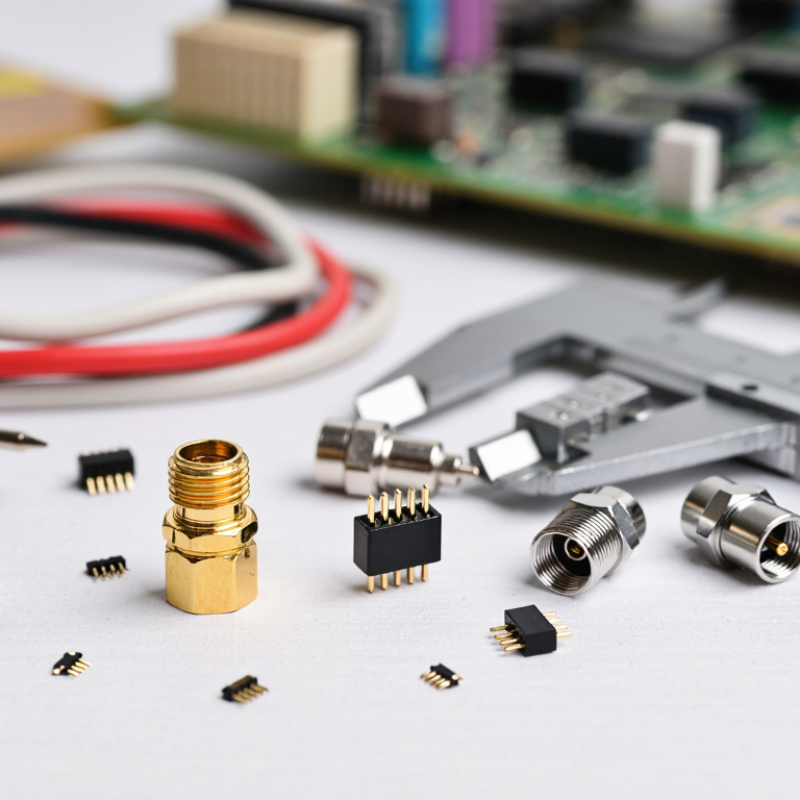
Micro connectors are compact electrical interfaces designed for limited board space. Common versions use pitches below 1 millimeter. They appear in wearables, medical sensors, vehicles, cameras, and industrial controllers.
Their value is not only small size. A reliable micro connector must manage current, vibration, heat, moisture, and repeated mating. In a real device, a 0.4-millimeter pitch can save board area. It can also make inspection and repair more difficult. Tiny parts demand better process control.
MarketsandMarkets projects the global electronic connectors market will grow from about USD 84 billion in 2023 to more than USD 105 billion by 2028. The report links growth to vehicle electrification, connected equipment, and higher electronic content. Micro connectors benefit from these trends, but market reports rarely separate micro products clearly. That limitation matters when comparing forecasts.
The IEC 60512 test series helps buyers evaluate electrical and mechanical performance. Request evidence for contact resistance, dielectric withstand, temperature cycling, vibration, and mating durability. Check the actual current rating after derating, not only the catalog headline. Field conditions can change the result.
Procurement teams should also review plating thickness, tolerance control, traceability, and regional compliance documents. A low-cost connector may create expensive assembly problems. I have seen specifications look complete while omitting cable flex limits. That is an avoidable gap. Define the use case, test the assembled product, and question every optimistic number.
Micro connectors are not interchangeable, even when their housings look nearly identical.
Board-to-board connectors support compact, stacked circuit designs, while wire-to-board types simplify harness replacement and field assembly. FFC and FPC connectors accept flat flexible cables, making them useful near hinges, displays, and sliding mechanisms. Coaxial micro connectors serve higher-frequency signals, where shielding and controlled impedance matter more than simple pin density.
Pitch creates the first visible difference. Common micro formats use 0.4 mm, 0.5 mm, or 0.8 mm spacing. Smaller pitch saves board area but raises alignment risk and inspection difficulty.
A 0.5 mm connector may carry only modest current, often below 1 A per contact, depending on contact length, temperature, and derating. The IEC 60512 test series evaluates electrical, mechanical, and environmental performance, but laboratory results do not perfectly predict a dusty production floor.
Market data also shows why selection is becoming more technical.
MarketsandMarkets’ 2024 connector report estimated the global connector market at more than USD 80 billion, with continued growth driven by electronics miniaturization and vehicle electrification. Bishop & Associates has repeatedly identified high-speed, automotive, and industrial applications as major demand areas. Those figures are useful, but market reports group many connector categories together. That can hide the real engineering trade-off.
For procurement teams, compare contact resistance, mating cycles, current derating, vibration performance, shielding, and cable retention.
Check the datasheet carefully. A tiny latch may look convenient, yet it can fail after repeated service access. Cost is not the whole decision.
Reliability is measured at the connector, not in the catalog title.
Choosing micro connectors starts with the application, not the smallest available part. A wearable device needs low profile, light weight, and reliable mating during movement. An industrial sensor needs stronger locking, vibration resistance, and stable signal performance. For high-speed cameras, impedance control and shielding matter more than simple size. MarketsandMarkets estimates that the global connectors market may grow from about USD 84.5 billion in 2024 to USD 106.2 billion by 2029. This growth reflects rising demand for compact, connected equipment.
Check the electrical load, mating cycles, operating temperature, and available board space. A connector rated for 0.5 amperes may fail in a motor-control application. In contrast, a high-current design can waste space and increase cost. Review insertion force and cable bend radius with real samples. Laboratory figures can feel different in a production fixture. The IEC 60512 test series provides useful methods for evaluating connector performance, including contact resistance and mechanical endurance. However, test results may not fully represent dust, sweat, or repeated field handling.
Tips: Match contact plating to the environment and expected mating cycles. Confirm signal integrity above the target frequency. Leave a small clearance for assembly tools. Do not trust dimensions alone. A connector that fits the drawing may still be difficult to repair. Consider the full lifecycle, including replacement access, inspection, and operator error. This last point is often overlooked. And sometimes, the “best” micro connector is slightly larger but far easier to service.
Global buyers need more than compact dimensions and attractive pricing. Micro connectors must match regional standards, equipment requirements, and documented quality controls. Common checks include contact spacing, current rating, mating cycles, insulation performance, and operating temperature. A connector may fit a prototype perfectly. It can still fail after vibration, humidity, or repeated assembly. Small errors matter.
Ask suppliers for current test reports, material declarations, and certificate numbers before placing a large order. IEC 60512 test methods can support electrical and mechanical evaluations. ISO 9001 certification indicates a quality system, but it does not guarantee every shipment is consistent. Request RoHS and REACH declarations when products enter regulated markets. Some regions also require specific markings, importer records, or technical files. Requirements change. Confirm them with a qualified compliance professional.
Sourcing should include samples from the intended production line, not only warehouse stock. Check terminal plating under magnification, cable retention, housing flash, and mating force. Record results by lot number. Ask how rejected parts are separated and how corrective actions are documented. Traceability is essential. Packaging deserves attention too; loose terminals can bend during international transport. A low unit price may hide tooling, inspection, or customs risks. I have found that supplier questionnaires often look complete, yet several answers remain vague. That is a warning to investigate further. Trade terms, lead times, change-notice procedures, and replacement policies should be written clearly before approval.
2026 Best Micro Connectors for Global Buyers
Choosing micro connectors requires more than comparing unit prices. A capable supplier should provide controlled drawings, material declarations, inspection records, and traceable production samples. Ask how terminals are plated, how housings resist heat, and how many mating cycles the design supports. Samples reveal surprises.
Cost comparison should include tooling, minimum order quantities, packaging, testing, freight, and possible rework. A connector priced at $0.08 may become expensive after custom molds and air shipping. Request a line-by-line quotation with currency, payment terms, and delivery assumptions. Price is not the whole story.
Reliability depends on evidence, not confident promises. Review dimensional reports, contact resistance results, retention-force data, and failure records from comparable applications. Lead times should separate sample approval, tooling, production, and export handling. Eight weeks may mean only factory time. Confirm every stage in writing. Lead time matters. A supplier with local stock may still lack consistent replenishment. Another supplier may offer stronger process control but require a larger forecast. No scorecard is perfect. Recheck critical assumptions after pilot production, because early samples can hide variation in plating thickness or terminal alignment. For global buyers, clear communication and realistic scheduling often outweigh the lowest initial quotation.
Comparison of common micro-connector supply options using typical engineering and procurement ranges. Prices are indicative USD unit prices for production quantities and vary by specification, tooling, plating, packaging, testing, order volume, and shipping terms.
| Connector Category | Typical Applications | Typical Pitch | Typical Positions | Indicative Unit Cost at 10,000+ Units | Typical MOQ | Sample Lead Time | Production Lead Time | Typical Reliability and Qualification Indicators | Best Supplier-Selection Priorities |
|---|---|---|---|---|---|---|---|---|---|
| Micro Board-to-Board Connector | Compact control boards, wearable electronics, sensors, handheld devices, and embedded modules. | 0.35–0.80 mm | 10–80 contacts | US$0.08–0.65 | 1,000–10,000 pieces | 2–5 weeks | 6–10 weeks after approval | Usually rated for 30–100 mating cycles; contact resistance commonly below 50 mΩ; operating temperature often −40°C to +85°C or higher. | Dimensional consistency, coplanarity, mating guidance, retention force, high-temperature testing, and compatibility with automated assembly. |
| Micro Wire-to-Board Connector | Battery packs, lighting controls, industrial sensors, medical instruments, and compact power or signal harnesses. | 0.80–1.25 mm | 2–20 contacts | US$0.06–0.45 | 2,000–20,000 pieces | 2–4 weeks | 5–9 weeks after approval | Typical current rating is 0.5–3 A per contact, depending on wire size and temperature rise; positive locking and terminal retention are important reliability features. | Terminal crimp quality, pull-out force, lock design, wire-size range, current derating, and availability of pre-assembled cable samples. |
| Micro FFC/FPC Connector | Displays, cameras, printers, portable instruments, automotive modules, and high-density flexible circuits. | 0.30–1.00 mm | 4–60 contacts | US$0.05–0.40 | 3,000–30,000 pieces | 2–5 weeks | 6–12 weeks after approval | Typical contact resistance is below 60 mΩ; zero-insertion-force designs reduce cable damage; lifecycle ratings commonly range from 10 to 30 insertion cycles. | FPC thickness tolerance, actuator strength, cable retention, contact normal force, solderability, and resistance to vibration and flexing. |
| Micro Coaxial RF Connector | Wireless modules, GPS equipment, routers, test instruments, cameras, and compact antenna assemblies. | Approx. 0.81–1.13 mm cable systems | Single coaxial contact | US$0.12–1.20 | 500–5,000 pieces | 3–6 weeks | 7–12 weeks after approval | Common frequency capability extends to several GHz; performance depends heavily on cable construction, shielding, return loss, insertion loss, and termination control. | RF test data, impedance control, cable routing, shielding effectiveness, return-loss limits, connector retention, and calibrated inspection equipment. |
| Micro USB-Type Data and Power Connector | Legacy portable electronics, development equipment, service interfaces, and low-profile charging applications. | Approximately 0.65 mm contact pitch | Typically 5 contacts | US$0.08–0.35 | 5,000–50,000 pieces | 2–4 weeks | 5–9 weeks after approval | Typical current capability is up to about 1.8 A for standard implementations; mechanical durability often ranges from 5,000 to 10,000 cycles, depending on construction. | Shell strength, plug retention, solder-joint stability, corrosion resistance, contact plating, and compliance with the applicable interface specification. |
| Micro Circular Connector | Medical devices, industrial controls, robotics, instrumentation, and compact outdoor equipment. | Contact pitch varies by design | 2–12 contacts | US$0.80–6.00 | 100–2,000 pieces | 4–8 weeks | 8–16 weeks after approval | Can provide stronger environmental protection than open-board connectors; sealing levels, vibration resistance, mating cycles, and temperature ratings depend on the housing design. | Ingress protection, cable overmolding, strain relief, locking method, chemical resistance, vibration testing, and field-replacement requirements. |
| Micro Terminal and Spring-Contact Connector | Battery contacts, charging docks, wearable devices, test fixtures, and removable modules. | 0.50–2.00 mm contact spacing | 1–20 contacts | US$0.03–0.80 | 1,000–20,000 pieces | 2–5 weeks | 6–10 weeks after approval | Electrical stability depends on normal force, plating, wiping action, and contamination control; gold-plated contact areas are commonly used for low-level signals. | Contact force, spring travel, compression tolerance, plating thickness, wear testing, resistance to dust and oxidation, and assembly orientation. |
| High-Density Mezzanine Connector | Computing modules, industrial controllers, communication equipment, and stacked electronic assemblies. | 0.40–0.80 mm | 20–200 contacts | US$0.25–2.50 | 500–5,000 pieces | 4–8 weeks | 8–14 weeks after approval | Signal integrity can be affected by crosstalk, impedance discontinuity, insertion loss, and coplanarity; mechanical guidance and retention are critical at high contact counts. | High-speed test capability, stack height tolerance, mating alignment, coplanarity, thermal cycling, vibration performance, and traceable process control. |
No. Board-to-board, wire-to-board, flat-cable, and coaxial types serve different needs. Similar shells can hide different contacts, locks, and signal paths.
Smaller pitch saves board space, but increases alignment risk and inspection difficulty. A 0.4 mm pitch needs tighter assembly control than 0.8 mm.
Flat flexible cable connectors are usually suitable near hinges, displays, and sliding mechanisms. Check cable bend radius and retention carefully.
Review shielding, controlled impedance, and signal integrity at the target frequency. Coaxial micro connectors often fit these needs better than ordinary dense connectors.
A 0.5 mm connector may carry less than 1 ampere per contact. Temperature, contact length, and derating can reduce that value.
Strong locking, vibration resistance, and stable electrical contact matter most. A tiny latch may become troublesome after repeated maintenance access.
No. Compare contact resistance, mating cycles, cable retention, temperature range, and repair access. A slightly larger connector may reduce service mistakes.
Not perfectly. Standard tests measure useful electrical and mechanical properties, but dust, sweat, and rough handling may change results.
Confirm pitch, current rating, mating cycles, plating, board clearance, and cable bend radius. Test real samples in the intended fixture. Drawings can mislead.
No. Small is not always better. The best option balances size, reliability, assembly effort, inspection, and future replacement access. I would recheck serviceability before approving it.
In 2026, Micro Connectors are essential for designing smaller, lighter, and more reliable electronic devices. Their compact size supports space-efficient products while maintaining stable signal and power transmission. This guide explains the main connector types, including board-to-board, wire-to-board, coaxial, and flexible circuit options, highlighting differences in pitch, contact configuration, current capacity, durability, and environmental performance. Understanding these technical factors helps engineers match connectors with applications such as consumer electronics, industrial controls, medical equipment, automotive systems, and communication devices.
The article also outlines how to select Micro Connectors according to operating conditions, mechanical constraints, assembly methods, and long-term reliability requirements. Global buyers should review applicable standards, safety certifications, material declarations, testing procedures, and import documentation before purchasing. Finally, it provides a practical framework for comparing suppliers by evaluating total cost, customization capability, quality consistency, production capacity, minimum order quantities, lead times, logistics support, and after-sales service. This approach helps buyers reduce sourcing risks and build dependable international supply chains.

Stpete Electronics