Global buyers entering 2026 need more than a simple list of connector products. The right Female Pin Connector depends on current, voltage, mating cycles, sealing, temperature, and installation method. A compact crimp terminal may suit automotive harnesses, while a PCB-mounted pin connector fits control boards and industrial equipment. Small differences matter. A loose crimp can create heat, resistance, and expensive field failures.
Industry data supports this broader view. The International Energy Agency’s Global EV Outlook 2024 reported continued growth in electric vehicle deployment, increasing demand for reliable high-voltage connection systems. TE Connectivity’s 2024 annual reporting also highlighted transportation, industrial, and data-focused connectivity as important business markets. Meanwhile, connector market studies from Grand View Research identify miniaturization, automation, and higher data rates as continuing industry drivers. These reports do not identify one universal “best” connector. They show why application conditions must guide selection.
This 2026 guide compares common Female Pin Connector types for international purchasing teams, including crimp, PCB, wire-to-wire, sealed, high-current, and signal versions. It considers contact materials, plating, IP protection, operating temperature, certification requirements, and supplier consistency. Buyers should verify drawings, test reports, and traceability before approving samples. Specifications can look perfect on paper.
Real projects are less tidy. A connector rated for 10 amps may perform differently after vibration, oxidation, or repeated mating. Regional terminology can also cause confusion, especially when “female pin” describes a socket contact rather than a complete housing. Careful engineers will question the label, inspect the interface, and confirm the actual operating environment before placing a global order.
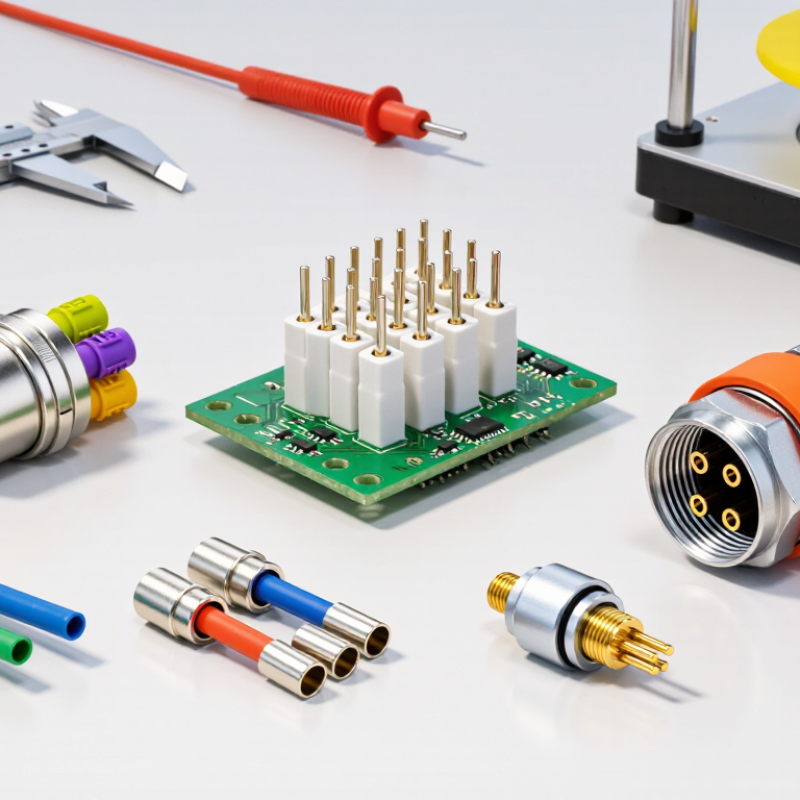
In connector terminology, “female” usually describes a socket contact that receives a mating pin. The phrase “female pin connector” is used inconsistently, so check the drawing before ordering. A socket’s openings may look identical, yet differ in pitch, depth, and retention force. Position count means the number of electrical contact locations; pitch is the center-to-center distance between adjacent positions. These details matter when matching a harness to a board.
Other key terms include current rating, voltage rating, wire gauge, termination style, and contact plating. Crimp contacts grip stripped wire inside a metal barrel; solder contacts use heat to make the joint. Plating affects corrosion resistance and contact performance, but the right choice depends on the application. Grand View Research’s 2023 connector-market report estimated the global connector market at about US$84 billion. That broad figure gives context, not a forecast for female pin connectors alone.
Tips: Compare mating drawings, not just product photos. Confirm pitch with calipers, and check the specified wire range and operating temperature. A familiar fit can still be wrong. For qualification, review relevant IEC 60512 test methods for connector performance; requirements vary by design, and a catalog description may not answer every question.
Main Female Pin Connector Types Available in 2026
Female pin connectors receive matching male pins through a socket or contact cavity. Common options include crimp, solder, press-fit, and spring contacts. Crimp sockets suit wire harnesses and can handle repeated vibration when properly fitted. Solder-tail versions attach to circuit boards, while press-fit contacts avoid soldering but require compatible hole dimensions. Spring contacts allow quick, tool-light connections, though their retention and current capacity vary by design.
Connector housings may be circular or rectangular, with single-row or multi-row layouts. Wire-to-board and board-to-board formats serve different installation needs. For example, a compact rectangular housing can save space inside a control enclosure, while a circular connector may better suit equipment exposed to movement. The naming is not always tidy; suppliers may use different terms for similar contact styles. Check drawings and specifications rather than relying on the label alone.
Tips: Match the socket’s contact size to the pin diameter, then verify rated current, voltage, temperature, and mating cycles. Inspect crimp height and pull strength on sample assemblies. A loose fit can cause intermittent signals; an overly tight fit may damage contacts. Do not assume that similar-looking connectors mate safely. Double-check pitch and keying.
Female pin connectors include crimp sockets, solder-cup sockets, and board-mount receptacles. Their shapes may look similar, but their performance can differ sharply. Compare rated voltage and current, contact resistance, insulation resistance, and dielectric withstand voltage. Match wire gauge and termination method to the actual assembly. A catalog rating alone is not enough.
Grand View Research’s 2024 Electrical Connectors Market report estimated the global market at USD 84.5 billion in 2023 and projected 5.7% annual growth through 2030. That scale makes careful specification practical, not pedantic. For each candidate, check the test conditions behind its ratings. IEC 60512 provides test methods for electrical and mechanical connector characteristics. Ask for results at the intended temperature and current, not just room-temperature figures.
Then compare mating cycles, contact retention, insertion force, vibration performance, and environmental sealing. A socket used in a vibrating enclosure needs secure contact retention; a damp installation needs suitable protection and verified sealing. Check drawings for pin alignment, panel thickness, and clearance around the latch. Fit matters. It is easy to over-trust a neat datasheet. Request samples and test the real cable, housing, and mating part together; small tolerances can change the feel and reliability of the connection.
Female connectors are receptacles designed to accept mating pins. Common options include crimp terminals for wire harnesses, PCB sockets for board-level connections, and circular or rectangular multi-contact housings. Choose by application, not appearance. The IEA’s Global EV Outlook 2025 reports that electric car sales exceeded 17 million in 2024, representing more than 20% of new-car sales. This growth highlights the need for connectors that tolerate vibration, heat, and repeated servicing in vehicle systems.
Check rated current, voltage, wire size, operating temperature, and mating-cycle life against the real installation conditions. A compact crimp socket may suit a control cabinet, while a sealed circular receptacle may better protect an outdoor sensor from dust and moisture. For international projects, confirm dimensional compatibility and relevant test requirements with suppliers; similar-looking contacts are not always interchangeable. A catalog match can still fail in the field. I have seen teams underestimate cable strain and leave too little room for repair.
Tip: Request a sample and test it with the actual wire, housing, and mating pin. Verify retention, fit, and sealing after assembly. A small trial may reveal a problem that a specification sheet misses.
Female pin connectors are usually socket contacts, but “female” alone is not a purchasing specification. Buyers should define contact style, pitch, current rating, wire range, plating, and mating dimensions. Stamped contacts suit many high-volume assemblies; machined contacts can offer tighter dimensional control for demanding applications. For crimp types, request pull-force results and inspect crimp cross-sections, not just polished sample photos. Small details matter. A socket that accepts a pin may still loosen after repeated mating.
Global sourcing adds schedule and documentation risks. UNCTAD’s Review of Maritime Transport 2024 reported that container freight rates rose about 150% between October 2023 and June 2024, a reminder to qualify alternatives before urgent orders arise. The World Bank’s Logistics Performance Index 2023 assessed 139 economies, highlighting how customs, infrastructure, and shipment reliability vary by route. Ask suppliers for lot traceability, material declarations, dimensional inspection records, and test evidence aligned with relevant IEC 60512 methods. Confirm the exact revision and test conditions; a certificate without scope can mislead. I would also sample connectors from more than one production lot. It takes time, and it may reveal inconsistencies that a single sample hides.
It usually describes a socket contact that receives a matching pin. The naming can be confusing.
Check position count, pitch, contact depth, and mating dimensions. Use a drawing, not only a product photo.
Pitch is the center-to-center distance between adjacent contact positions. Measure carefully; a small mismatch matters.
Crimp contacts grip stripped wire inside a metal barrel. Solder contacts use heat to join the wire or contact.
Press-fit contacts avoid soldering but need compatible hole dimensions. Spring contacts allow quick connections, though retention varies.
Match the socket size to the pin diameter. Check pitch and keying too. Similar-looking parts may not mate safely.
Ask for lot traceability, dimensional inspection records, material declarations, and relevant test evidence. Confirm the test conditions.
Review pull-force results and crimp cross-sections. Inspect samples from more than one production lot. One sample may hide variation.
This guide introduces the Female Pin Connector and explains key terminology, including contact layout, pitch, housing, and mounting style. It surveys common connector types available in 2026, from compact board-level options to versions designed for cable connections and more demanding environments. Buyers will learn how to compare electrical ratings, contact materials, temperature limits, dimensions, retention features, and mating compatibility to narrow down suitable choices.
For global applications, connector selection should reflect the equipment’s operating conditions, installation needs, and expected service life. The guide also highlights practical sourcing considerations, such as clear technical documentation, consistent manufacturing quality, traceability, and appropriate conformity information for the intended market. By evaluating both performance requirements and supplier processes, buyers can make more informed decisions and reduce the risk of fit, reliability, or procurement issues.

Stpete Electronics