Pin Header Connector products are small components, but their fit can affect an entire assembly. A slightly incorrect pitch may prevent a board from mating cleanly. Plating, pin length, housing material, and tolerance also shape performance. Buyers comparing China-based manufacturers and suppliers should look beyond price lists. They need clear specifications, consistent production, and practical communication.
Details matter. This guide introduces factors for evaluating suppliers, including product range, customization options, sample availability, quality checks, and production capacity. A useful comparison starts with the application: board spacing, current needs, operating conditions, and assembly method. Then review drawings and datasheets against the exact part number. Ask how batches are inspected and whether material or process changes are communicated. These questions can reveal gaps before a large order is placed.
No supplier is right for every project. A polished website does not prove dependable output, and one successful sample cannot guarantee every future batch. That is worth remembering. Buyers should verify claims through samples, documentation, and, where practical, a small trial order. The sections ahead will help readers compare leading Chinese manufacturers and suppliers with a more grounded approach. The aim is not to name a universal winner, but to identify a partner whose capabilities match the product, schedule, and quality expectations.
What Pin Header Connectors Are and Where They Are Used
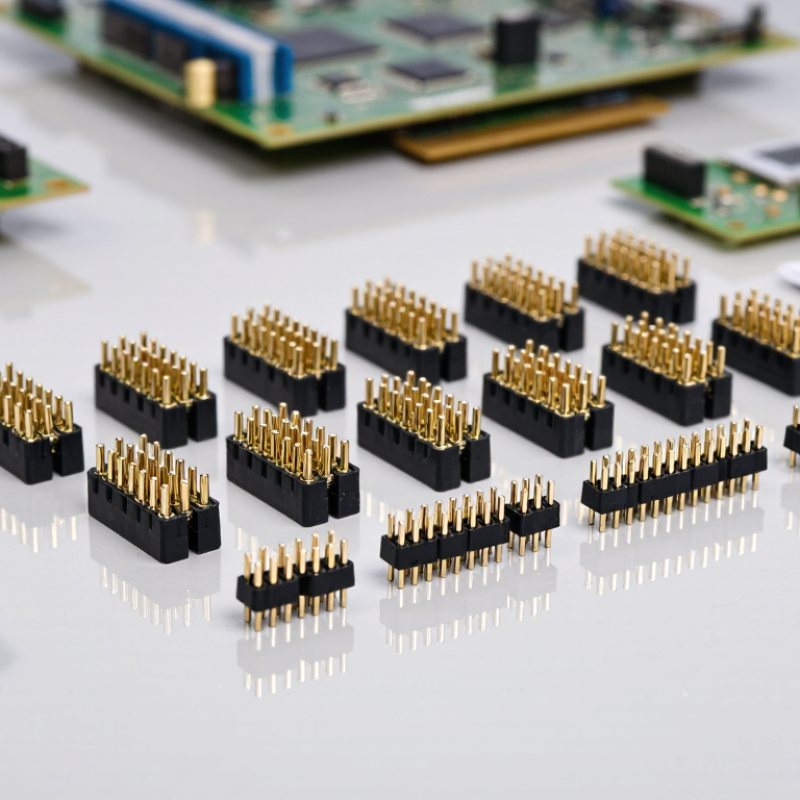
Pin header connectors are rows of metal pins mounted on a printed circuit board, usually in a plastic housing. They provide a straightforward connection between boards, cables, or test equipment. Common versions have one or two rows, with 2.54 mm pitch often used in prototypes and compact control boards. Smaller pitches suit denser layouts. The fit can look obvious. It is not.
Designers use pin headers in embedded systems, sensor modules, industrial controls, and consumer electronics. A board may use them to connect a display, carry power to a small module, or expose signals for testing. Before selecting one, engineers check pin count, pitch, mounting style, current rating, and mating connector compatibility. A header that sits slightly off-axis can complicate assembly. Vibration and repeated plugging also matter; these details are easy to overlook.
Market data provides context, not a pin-header sales estimate. Grand View Research valued the global electrical connectors market at about USD 84.1 billion in 2023 and projected a 5.8% compound annual growth rate from 2024 to 2030. That broad category includes many connector types, so it should not be read as pin-header-specific data. For procurement, verify the drawing and sample-fit the mating part; catalog dimensions alone can miss practical tolerances.
Common Pin Header Connector Pitch Sizes
Nominal spacing between adjacent pins, in millimeters
Pin headers are rows of pins mounted on printed circuit boards to connect components, cables, or other boards. These commonly available pitch sizes range from compact 1.00 mm formats to the widely used 2.54 mm format. The appropriate pitch depends on board space, mating components, and assembly requirements.
Key Types, Materials, and Specifications of Pin Header Connectors
Pin headers are commonly supplied as single-row or dual-row parts, with straight, right-angle, shrouded, or unshrouded layouts. Pitch matters: 2.54 mm suits many general-purpose boards, while 2.00 mm and 1.27 mm save space. Contact pins are often brass or phosphor bronze, plated with tin, nickel, or gold. Insulators commonly use PBT, PA, or high-temperature LCP. Each material changes cost, soldering tolerance, and durability. Small details count.
For selection, compare pitch, pin length, row spacing, rated current, voltage, and operating temperature. Current capacity varies with contact size, plating, and heat dissipation; a catalog rating is not a universal guarantee. IEC 60603-13 covers connector dimensions and requirements for applicable board connectors, while IEC 60512 describes electrical and mechanical test methods. Grand View Research estimated the global connector market at USD 84.9 billion in 2023, reflecting the scale of this component sector, not pin headers alone. A practical review should check the exact test conditions behind any rating. I’ve seen pitch treated as the whole specification; it isn’t. A header can fit neatly and still fail the application.
China’s Pin Header Connector Manufacturing Landscape
China’s pin header connector manufacturing landscape combines metal stamping, precision molding, plating, and assembly within a broad industrial supply network. Manufacturers commonly produce single-row and double-row headers, with options for different pitches, pin lengths, and mounting styles. These details matter: a small change in pitch can affect board layout, while uneven pins may complicate insertion during assembly. Capabilities vary between factories, so a location alone does not establish product quality.
Reliable sourcing depends on checking process control, not just a catalogue. Ask how suppliers inspect pin straightness, plating coverage, and dimensional consistency. Request drawings and sample parts that match the intended PCB footprint. Review packaging, too; bent pins can arrive even when production tolerances are sound. Some specifications are easy to overlook. I would also compare sample results with the production order, since one good sample cannot prove every batch will be identical.
Tips: Confirm pitch, pin count, orientation, and plating requirements in writing. Ask for a current inspection record and test samples under actual assembly conditions. Small checks can prevent rework.
How to Evaluate Chinese Pin Header Connector Manufacturers and Suppliers
China Best Pin Header Connector Manufacturers and Suppliers
How to Evaluate Chinese Pin Header Connector Manufacturers and Suppliers
Choosing a pin header supplier requires more than comparing unit prices. Start with your drawing, including pitch, pin length, row spacing, and mounting details. For example, a 2.54 mm pitch may look correct on paper but still fail if the mating socket or board layout differs. Ask how the manufacturer checks dimensions and handles drawing revisions. Clear answers matter.
Request samples made with the proposed materials and finish. Check pin alignment, coplanarity, plating appearance, and solderability under your intended assembly process. A supplier should explain its base material, plating options, inspection steps, and batch traceability. Ask for measurement records where appropriate, not just a general quality promise. Production consistency deserves attention too: one good sample cannot prove every later batch will match. No checklist catches everything. A trial order can expose details that a polished quotation misses.
Tips: Send the same specifications to each supplier, then compare technical responses alongside price and lead time. Keep a written record of approved samples and changes. If an answer feels vague, ask again; it may be your specification that needs work, too.
Sourcing, Quality Checks, and Supplier Selection in China
Sourcing pin header connectors in China requires more than comparing unit prices. The WSTS Fall 2024 forecast put global semiconductor sales at $697.1 billion for 2025, up 11.2% from 2024. This is not a pin header market estimate, but it shows the scale of electronics demand behind component supply chains. Buyers should verify a supplier’s actual production capability, not rely on a polished catalogue.
Ask for drawings that specify pitch, row spacing, pin dimensions, plating, and material. Compare those details with measured samples. Check coplanarity under magnification, then test continuity and mating force with the intended socket. IEC 60512 describes test methods for electrical connectors; request relevant test records and confirm the conditions match your application. Samples are not proof. A small sample may not reveal variation between production lots.
For quality checks, request inspection criteria, traceable lot records, and evidence of process control. Confirm how the supplier handles nonconforming parts and corrective actions. If the connector will face vibration or temperature changes, agree on suitable qualification tests before placing a large order. A tidy sample can still hide inconsistent plating or pin alignment. I would not treat a certificate alone as proof of stable output; review recent records and inspect a production lot where practical. Details matter.
FAQS
Specify pitch, pin count, row spacing, pin length, mounting style, material, and plating. Small changes can affect board fit.
No. Check it against the PCB footprint and mating socket. A drawing can look right and still mismatch.
Check pin alignment, coplanarity, plating appearance, and dimensions. Then test continuity, solderability, and mating force in your assembly setup.
No. One sample cannot show variation across later batches. Ask for lot records, and inspect production parts when practical.
Request inspection criteria, recent measurement records, and traceable lot information. Ask how nonconforming parts are handled.
Not by itself. Compare technical responses, samples, production capability, and lead time. A polished catalogue may leave key details unclear.
Ask how parts are packaged and inspect them on arrival. Sound production tolerances do not prevent every shipping problem.
If connectors face vibration or temperature changes, agree on suitable tests before a large order. I might still miss something; real assembly trials can reveal it.
Conclusion
Pin Header Connector products are widely used to join circuit boards, modules, cables, and electronic components, offering a practical way to create secure electrical connections. They come in different layouts, pin counts, pitches, orientations, and mounting styles to suit varied designs. Materials, plating, insulation, current ratings, and dimensional tolerances all influence a connector’s performance, durability, and compatibility.
China has a broad manufacturing base for pin header connectors, with suppliers offering options for standard and custom requirements. When evaluating a manufacturer, buyers should consider production capabilities, technical support, quality-control processes, communication, and consistency between samples and bulk orders. A careful sourcing process includes confirming specifications, reviewing material and inspection details, testing samples, and agreeing on packaging and delivery expectations. These checks help buyers compare suppliers and select products that meet their application needs reliably.

 Stpete Electronics