Global buyers increasingly treat Circular Connectors as critical infrastructure, not simple hardware. A connector may sit behind a control panel, inside a robotic arm, or beneath a vibrating aircraft seat. Its failure can interrupt production, expose equipment to moisture, and create costly maintenance delays. That makes selection more demanding than comparing catalogue prices.
Dr. Eric Bogatin, a respected signal-integrity expert, offers a useful engineering principle: “The best design is the one that meets the requirements.” For Circular Connectors, those requirements include contact density, sealing performance, vibration resistance, temperature range, locking style, and service access. Buyers must also examine plating quality, mating cycles, cable compatibility, and supplier traceability. A connector that performs well in a dry laboratory may struggle in salt spray or repeated field installation.
This guide compares leading Circular Connectors for international purchasing teams. It considers established manufacturers, application fit, customization, documentation, and long-term availability. Those details matter. A lower unit price can become expensive when tooling changes, replacement contacts, or technical support are unavailable. No ranking is flawless, because industrial environments differ widely. That limitation deserves attention. Buyers should validate shortlisted products through drawings, samples, and application-specific testing. They should also confirm relevant ratings with the manufacturer, rather than trusting attractive marketing language alone. The strongest choice is rarely the most famous connector. It is the one that fits the machine, the environment, and the maintenance reality.
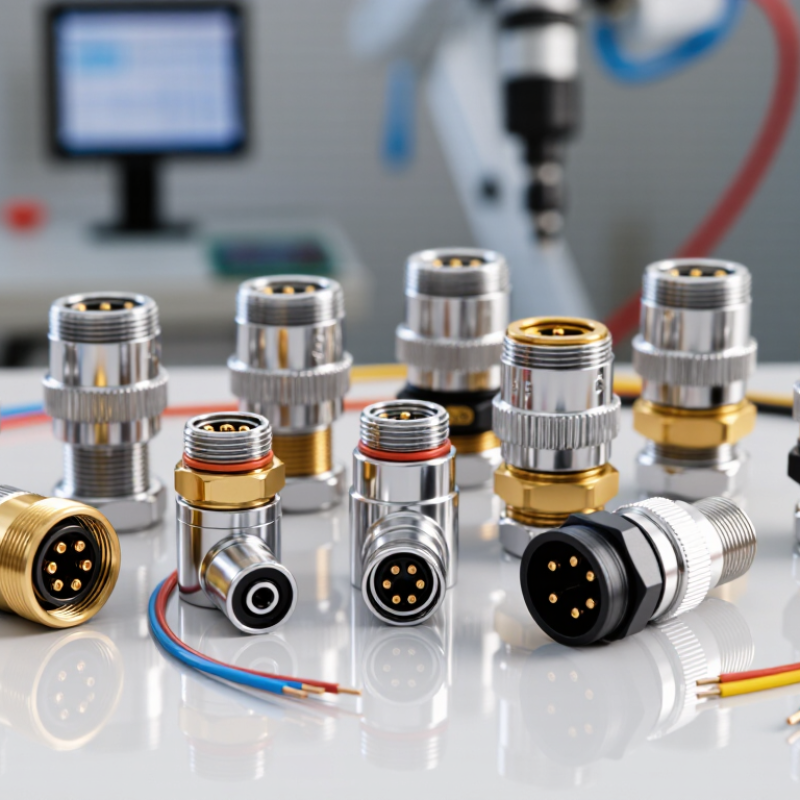
What Are the Top Circular Connectors for Global Buyers?
Circular connectors join cables and equipment through a round, locking interface. Their structure usually includes contacts, an insulating insert, a shell, seals, and a coupling mechanism. The contacts carry power or signals. The shell provides mechanical protection. Seals help resist moisture, dust, vibration, and temperature changes.
A 2024 Grand View Research report estimated the global connectors market at about USD 84 billion in 2023. It also projected steady growth through 2030, driven by vehicles, industrial automation, renewable energy, and communication equipment. Circular connectors support these sectors because their threaded, bayonet, or push-pull couplings reduce accidental disconnection. Engineers must still check contact count, current rating, voltage rating, cable size, and operating temperature. An IP67 rating, defined under IEC 60529, indicates protection against temporary water immersion. It does not guarantee resistance to chemicals or repeated impact. That distinction is easy to miss.
Tips: Match the connector to the real environment, not the catalog photograph. Confirm mating cycles, shielding, and field-replacement needs. Ask for test reports and material declarations. A lower unit price may increase installation labor. I have seen specifications focus on shell size while ignoring contact heating. That shortcut can fail. Global buyers should also verify regional documentation, because incomplete drawings can delay approval and create avoidable redesign work.
International buyers need more than a connector that simply fits.
The key types of circular connectors include M8 and M12 industrial connectors, push-pull connectors, bayonet connectors, and ruggedized military-style designs.
M8 connectors suit compact sensors, while M12 versions support factory automation, power, and data transmission.
Push-pull models save installation time in medical and testing equipment. Bayonet designs work well where vibration and repeated servicing are expected.
Performance details matter.
Buyers should check contact count, coding, current rating, shielding, and IP protection. An IP67 connector can resist temporary water immersion, but only when correctly mated. According to Grand View Research, the global circular connectors market is projected to grow at about 6% annually through 2030. MarketsandMarkets also identifies industrial automation, transportation, and aerospace as major demand areas. These reports show growth, yet their market boundaries differ. Treat the numbers as direction, not certainty.
Tips:
Match the connector to the complete system. Confirm cable diameter, mating cycles, temperature range, and regional certification before ordering. Request sample testing under real vibration and moisture conditions. A connector may pass a laboratory test and still fail during field installation. I have seen buyers focus on pin count while overlooking strain relief. That mistake becomes expensive. Buyers should also compare total cost, including tooling, replacement parts, and technician time. Some specifications remain unclear across suppliers, so written verification is essential.
Global buyers should compare circular connectors by application, not appearance. Brass contacts often provide stable conductivity, while aluminum shells reduce weight. Stainless steel suits harsh, corrosive locations but may increase cost. Thermoplastic bodies can resist impact and moisture when properly engineered. Material choice affects heat transfer, durability, and repair needs.
Check the complete rating, not one impressive number. An IP rating shows protection against dust and water, but it does not confirm vibration performance. Review voltage, current, temperature range, shielding, and cable compatibility together. In outdoor equipment, salt spray and repeated thermal cycling can expose weak plating quickly. Small details matter. A connector rated for 20 amps may require thicker conductors and careful torque control. Loose termination can create heat, even when the connector looks secure.
Connection performance depends on contact resistance, mating force, locking design, and cycle life. Threaded couplings can resist vibration, while bayonet systems may support faster maintenance. Measure insertion force and inspect contact wear after repeated mating. Field testing should include vibration, humidity, and temperature changes, not only a clean laboratory check. A connector can pass a bench test and still fail during installation. Buyers should request traceable test records and clear tolerances from suppliers. I would also allow room for uncertainty; published cycle counts may not reflect dirty gloves, rushed assembly, or side-loaded cables. Reliable comparisons require evidence, consistent testing, and realistic installation conditions.
| Connector family | Typical shell material | Contact material / plating | Typical contact count | Typical current per contact | Typical voltage rating | Ingress protection | Operating temperature | Locking / mating method | Connection performance | Best-fit applications |
|---|---|---|---|---|---|---|---|---|---|---|
| M8 miniature sensor connectors | Nickel-plated brass or polymer | Copper alloy, commonly gold-plated | 3–6 | 1.5–4 A | 30–60 V AC/DC | Up to IP67 when mated | Approximately −25 to +85 °C | Threaded coupling | Compact size, reliable signal transmission, limited power capacity | Photoelectric sensors, proximity sensors, compact automation equipment |
| M12 industrial connectors | Nickel-plated brass, stainless steel, or molded polymer | Copper alloy, usually gold-plated | 3–17, depending on coding and layout | 2–12 A | 30–250 V AC/DC | Up to IP67 or IP68 when mated | Approximately −40 to +105 °C | Threaded coupling; some variants use push-lock coupling | Strong balance of size, vibration resistance, sealing, and data capability | Factory automation, industrial Ethernet, sensors, actuators, control cabinets |
| M16 / M23 automation connectors | Nickel-plated brass or metal alloy | Copper alloy with gold or silver plating | 3–19 or more, depending on design | 5–20 A | 150–630 V AC/DC | Typically IP65–IP68 when mated | Approximately −40 to +125 °C | Threaded coupling with keyed polarization | Higher power and contact density than miniature sensor formats | Servo motors, machine tools, robotics, industrial control systems |
| Circular push-pull connectors | Metal alloy or high-performance thermoplastic | Copper alloy, commonly gold-plated | 2–40+, depending on shell size | 1–15 A | 100–500 V AC/DC | Commonly IP50–IP68, depending on sealing design | Approximately −40 to +125 °C | Push-pull latching | Fast blind mating, high operator efficiency, good panel density | Medical equipment, test instruments, broadcast systems, portable equipment |
| MIL-style bayonet circular connectors | Aluminum alloy, stainless steel, or composite material | Copper alloy, commonly gold-plated | 1–104, depending on shell and insert arrangement | 5–150 A, layout dependent | 250–1,500 V AC/DC | Typically IP65–IP67 when correctly assembled | Approximately −55 to +125 °C | Bayonet coupling with keying and polarization | Rugged construction, rapid coupling, strong resistance to shock and vibration | Transportation, defense equipment, heavy machinery, outdoor control systems |
| High-density threaded circular connectors | Aluminum alloy, stainless steel, or engineering polymer | Copper alloy with gold plating | 15–128, depending on contact diameter and layout | 1–13 A | 250–1,500 V AC/DC | Typically IP67 when mated and backshell-protected | Approximately −55 to +175 °C | Threaded coupling with multiple keying options | High contact density, strong environmental durability, secure retention | Avionics, aerospace electronics, rail systems, high-reliability instrumentation |
| Waterproof power circular connectors | Glass-filled nylon, thermoplastic, or metal alloy | Copper alloy, often silver- or tin-plated for power contacts | 2–8 power contacts, sometimes with auxiliary contacts | 20–200 A | 250–1,000 V AC/DC | Up to IP67 or IP68 when mated | Approximately −40 to +125 °C | Threaded, bayonet, or lever locking | Low resistance at high current, strong sealing, requires correct cable and torque selection | Battery systems, electric vehicles, outdoor power equipment, renewable-energy systems |
| Audio and control circular connectors | Zinc alloy, aluminum alloy, or polymer | Copper alloy, commonly nickel- or gold-plated | 2–7, with larger layouts available | 1–10 A | 50–250 V AC/DC | Usually IP20–IP65; sealed versions can reach higher ratings | Approximately −20 to +85 °C | Bayonet, threaded, or latch locking | Low-cost signal connection, easy handling, moderate environmental protection | Audio equipment, control panels, lighting systems, laboratory instruments |
Global buyers should evaluate circular connectors through compliance evidence, not appearance alone. The 2024 MarketsandMarkets report estimates the global connector market will grow from about USD 84.2 billion in 2023 to USD 106.1 billion by 2028. That growth increases sourcing pressure. It also raises the risk of incomplete documentation.
Start with the IEC 61076 series for connector dimensions and interfaces. Use IEC 60512 test methods to review contact resistance, vibration, temperature cycling, and durability. For sealed products, verify the IP rating under IEC 60529. Ask for test conditions, not only a certificate number. Paperwork matters. A supplier should also provide material declarations, traceability records, and quality-system evidence such as ISO 9001 certification. A certificate alone can mislead.
Regional rules require closer review. Products entering the European Union may need RoHS Directive 2011/65/EU compliance and REACH substance declarations. The United Kingdom may require UKCA-related documentation, depending on the finished equipment. In North America, NRTL or CSA recognition may apply to the end product rather than the connector itself. China RoHS, CCC scope, and local import documents also require case-by-case confirmation. Do not assume every connector needs every mark. That assumption wastes time and sometimes creates false confidence.
In practice, buyers should compare mating cycles, cable diameter, salt-spray results, and field-replacement procedures. A rugged shell is not enough. Procurement teams sometimes overlook plating thickness and mixed-metal corrosion. That is a preventable weakness. Regional compliance should be checked again when the connector enters a new application.
The chart compares commonly specified ingress protection ratings for circular connectors. The first IP digit represents protection against solid particles, while the second represents protection against water, as defined by IEC 60529.
Regional purchasing checks may also include EU RoHS Directive 2011/65/EU and REACH Regulation (EC) No. 1907/2006, UK requirements where applicable, China RoHS requirements under GB/T 26572, and UL or CSA evaluation for applicable North American end-use installations. IP ratings do not by themselves confirm electrical safety, EMC, material, or market-access compliance.
Selecting the right circular connector starts with the application, not the connector’s appearance. A compact connector may fit a control panel, yet fail in a wet outdoor cabinet. Define voltage, current, signal type, mating cycles, and available space before comparing options. I have seen installation delays caused by ignoring cable bend radius. That detail matters.
Check the environment carefully. Look for dust, water, vibration, chemicals, and temperature changes. Select a suitable protection rating and housing material for those conditions. For high-current circuits, verify contact capacity and heat rise under continuous load. For sensors, examine shielding, contact resistance, and signal integrity. A secure locking method also prevents disconnection during machine movement. Do not trust a datasheet alone. Confirm test conditions and tolerances.
Tips: Draw the connector layout at full scale. Measure the plug, cable exit, and service space. Leave room for gloved technicians. Choose keyed contacts when misalignment could damage equipment. Ask for mating-cycle data and inspection records. Consider field replacement, not only initial price. A connector that is difficult to clean may become a maintenance problem. No selection is perfect. Recheck the choice with a sample assembly and a realistic vibration or moisture test.
Common types include M8, M12, push-pull, bayonet, and ruggedized designs. M8 suits compact sensors. M12 supports automation, power, and data. Push-pull connectors save installation time. Bayonet connectors handle vibration and repeated servicing.
Check contact count, coding, current rating, shielding, and protection rating. Also compare cable diameter, temperature range, mating cycles, and strain relief. Pin count alone can mislead.
It can resist temporary water immersion when correctly mated. The rating does not cover poor assembly or damaged seals. Test it after installation. Small gaps matter.
Request test reports, material declarations, traceability records, and quality-system evidence. Review relevant IEC testing and regional substance requirements. A certificate number alone is not enough.
No. Requirements depend on the connector, finished equipment, destination, and application. Confirm the rules case by case. Assumptions waste time.
Define voltage, current, signal type, space, and mating frequency first. Then review dust, water, chemicals, vibration, and temperature changes. A compact connector may fail inside a wet outdoor cabinet.
Request samples and test them under realistic vibration and moisture conditions. Measure cable bend radius and service clearance. Laboratory success does not guarantee field performance.
Compare tooling, replacement parts, cleaning effort, and technician time. Consider field replacement, not only purchase price. I might still overlook something; written verification helps.
Circular Connectors are durable interconnection components designed to transmit power, signals, or data in demanding environments. Their round structure typically includes a housing, contacts, insulation, coupling mechanism, and sealing elements, with each part contributing to secure alignment, reliable conductivity, and protection against moisture, dust, vibration, and mechanical stress. Global buyers can choose among several types, including metal or plastic designs, cable, panel-mount, waterproof, high-temperature, and multi-pin configurations, depending on the application.
When comparing Circular Connectors, buyers should evaluate contact materials, housing strength, current and voltage ratings, mating cycles, environmental protection levels, shielding, and connection stability. International projects also require attention to recognized safety standards, testing documentation, certification requirements, and regional installation rules. The best selection balances electrical performance, mechanical durability, environmental resistance, ease of assembly, maintenance needs, supply consistency, and total cost. By matching connector specifications with operating conditions and compliance expectations, users can achieve dependable performance across industrial, transportation, automation, energy, and communication applications.

Stpete Electronics