A comprehensive overview of Zirconia alignment sleeves and optical interface technologies designed for high-density networks.
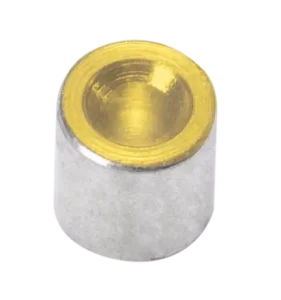
In the rapidly evolving world of telecommunications, data centers, and enterprise fiber optic infrastructure, signal integrity is paramount. At the heart of ensuring low insertion loss and high return loss lies the unassuming ceramic tube fiber optic adapter. Also known as the optical alignment sleeve, this highly precise component bridges the physical connection between two fiber optic ferrules. By leveraging the advanced material characteristics of Zirconia (ZrO2) ceramics, these adapters maintain exact concentricity, keeping sub-micron optical cores aligned under extreme mechanical and environmental stresses.
As networks migrate from 10G/40G architectures to ultra-dense 400G and 800G optical frameworks, any microscopic misalignment can lead to critical packet loss, signal reflection, or localized overheating. Enterprise-grade OEM ceramic tube fiber optic adapters provide the mechanical durability and structural stability required to withstand thousands of mating cycles without showing signs of fatigue. Selecting the right manufacturer and exporter is no longer just a purchasing decision—it is a critical choice for network reliability and performance assurance.
Analyzing structural performance, elasticity, and alignment precision across demanding network applications.
A primary point of evaluation in procurement is the choice of material for the alignment sleeve inside the fiber optic adapter. Traditionally, phosphor bronze was utilized for general-purpose applications; however, for modern single-mode fiber installations, Zirconia ceramic is the industry gold standard. Zirconia (Zirconium Dioxide) possesses unique physical traits such as high elasticity, wear resistance, and thermal stability. This allows the sleeve to expand slightly to receive the 2.5mm or 1.25mm ferrule and bounce back to its original dimensions, providing uniform retention force.
| Performance Metric | Zirconia Ceramic (ZrO2) Sleeves | Phosphor Bronze Sleeves | Impact on Transmission Quality |
|---|---|---|---|
| Typical Insertion Loss | < 0.15 dB (Singlemode) | < 0.30 dB (Multimode) | Zirconia keeps attenuation at minimums for high-speed fiber lines. |
| Mating Cycles Durability | Over 1,000 Matings | Approx. 500 Matings | Longer service life reduces maintenance costs in high-density patch panels. |
| Concentricity Tolerance | < 0.5 μm | < 1.5 μm | Sub-micron tolerances are essential for keeping single-mode cores aligned. |
| Thermal Expansion | Negligible (Stable up to 85°C) | Moderate (Risk of misalignment) | High stability prevents signal degradation due to temperature swings. |
How modern sourcing teams manage reliability, quality, and supply chain consistency.
Sourcing engineers prioritize adapters that meet Telecordia GR-326-CORE specifications. Micro-tolerances in the ID (Inner Diameter) and OD (Outer Diameter) ensure perfect fitment.
B2B buyers seek factories that offer customized configurations, such as LC duplex, SC simplex, or customized mounting footprints to match unique frame and chassis dimensions.
Traceability of raw zirconia powder, production batch numbers, and automatic optical inspection (AOI) data are must-haves for Tier 1 global exporters.
Established in 2005, Wenzhou Stpete Electronics Technology Co., Ltd. is a recognized high-tech enterprise specializing in the development, production, and sales of electronic and optical network connectors. Over the span of two decades, we have built a reputation among domestic and international customers for high-quality product manufacturing and trading services.
Our company employs over 200 professional employees and has completed over 500 major projects globally. We offer a full range of high-precision connectors, RF terminals, DC power outlets, USB sockets, and electronic components. Our extensive R&D investments and automated assembly processes allow us to cooperate with top-tier brands like Huawei and Hisense.

Advanced automated machinery, comprehensive inspection pipelines, and global industry patents.
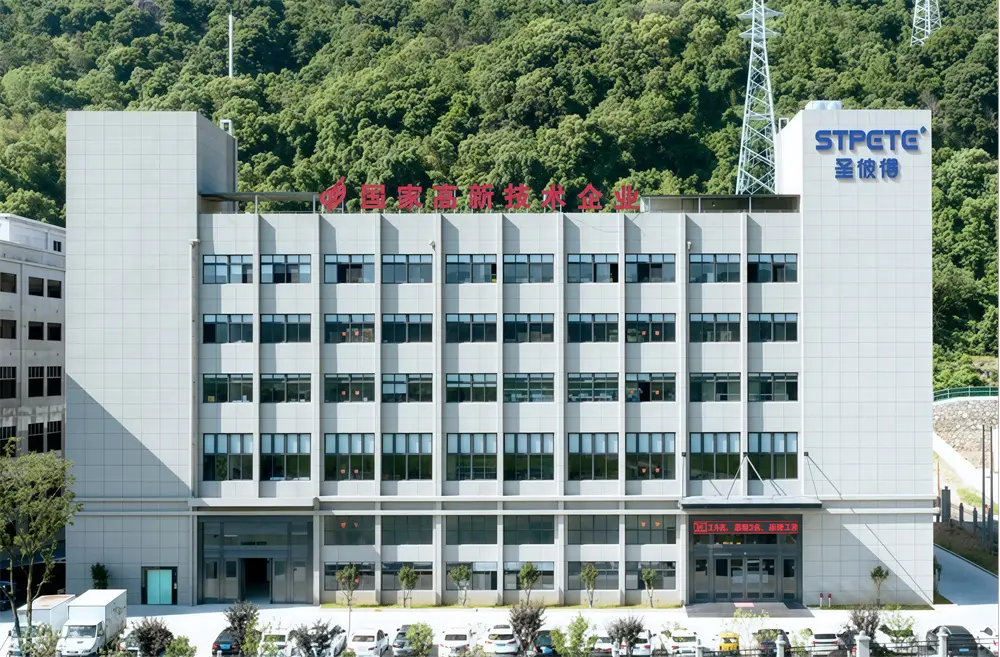
At Stpete, quality is guided by technology and based on safety. From the raw materials selection to the final package inspect and testing process, every step is monitored closely. We hold certifications for ISO 9001, ISO 14001, and OHSAS 18001. Our facility utilizes high-accuracy punching machines, CNC lathes, and automated insert molding machines to ensure every component adheres to client-specified concentricity tolerances.
Our inspection laboratories are equipped with digital imaging measuring devices, insertion force testers, and environmental aging chambers. Multiple inspection checkpoints are embedded within each manufacturing stage to minimize defect rates and guarantee reliable field performance.
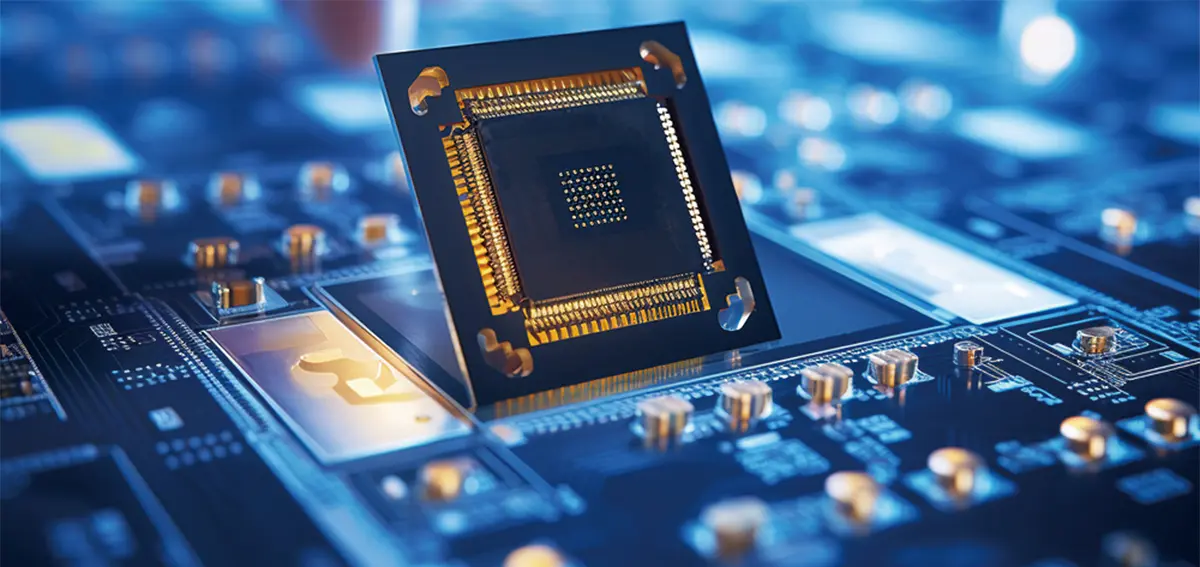
- 30+ Dedicated R&D engineers.
- Annual R&D budget exceeds 15 million RMB.
- 21+ active technology patents.
Strict evaluation of structural tolerance, mating durability, and electrical connectivity. Multi-point testing protocols guarantee long-term field stability.

Integrating automated assembly lines, high-level metal stamping, plastic molding, and connector housing design to meet global distributor requirements.
Fostering collaboration, continuous development, and corporate cohesion to serve international markets.
Beyond infrastructure and hardware, the core strength of Wenzhou Stpete Electronics lies in our collaborative team. We regularly organize professional training programs, technical workshops, and team-building events in natural settings. These activities strengthen communication channels and boost overall morale, directly translating to higher attention to detail in our manufacturing lines.
By building trust, quick thinking, and cross-functional coordination, our design, sales, quality, and shipping teams work as a unified force. This alignment allows us to respond to custom product RFQs and provide rapid prototyping and logistics coordination to customers across the Americas, Europe, and Asia.

How our design teams are preparing for ultra-high-density networks and FTTR architectures.
As operators expand Fiber-to-the-Room (FTTR) deployments and mega scale data centers introduce Co-packaged Optics (CPO) architectures, standard LC and SC connectors must become more compact. The industry is seeing rapid growth in Very Small Form Factor (VSFF) connectors such as SN and CS models. These connectors rely on ultra-miniature 1.25mm and smaller Zirconia ceramic tubes.
Our research labs are working closely with component engineers to further refine the internal bore smoothness of zirconia ceramic sleeves. Reducing surface roughness values ($Ra$) to less than $0.05\,\mu m$ minimizes frictional resistance. This development allows for even smoother fiber insertion, lowering insertion loss values close to the physical limit of light propagation.
Clear, authoritative technical answers to assist procurement, engineering, and manufacturing decisions.
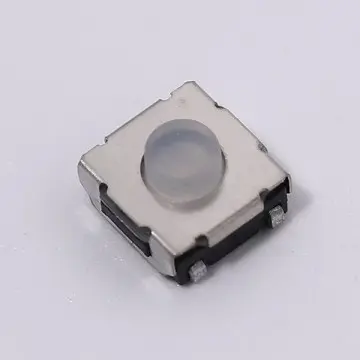
Need technical specifications, custom dimensions, or bulk pricing options? Contact Wenzhou Stpete Electronics today. Our support team will get in touch with you within 24 hours.
 Stpete Electronics