Premium tactile switches, RF components, and jacks manufactured to rigorous international standards.
In the domain of passive fiber optic network architecture, design optimizations that yields minor physical reductions often drive major operational returns. The terminology "Fiber optic adapter without hat" refers colloquially within the international manufacturing sector to a flangeless (or "earless/without cover flange") design. Standard adapters feature mounting flanges (or "ears") that facilitate screw-fastened integration onto panels. However, as datacenter density reaches critical thresholds, these flanges become physical constraints that impede modular packing efficiency.
Flangeless or "without hat" fiber optic adapters strip away this secondary structural flange, opting instead for integrated metal spring clips or internal locking mechanisms. This engineering design allows cards, panels, and ODFs (Optical Distribution Frames) to stack adapters side-by-side without gaps, maximizing port density by up to 40% compared to legacy flanged iterations.
Wenzhou Stpete Electronics Technology Co., Ltd. has stood at the intersection of such high-density hardware innovations, ensuring that space-saving architectures do not compromise structural alignment precision or light transmission capabilities.

Analyzing the macro forces governing the specification and procurement of flangeless optical alignment technologies.
Modern mega-datacenters operating millions of concurrent physical connections depend on flangeless adapters to maximize the port concentration in Fiber Distribution Frames (FDFs) and high-density MPO breakout frames.
Outdoor street cabinets and compact termination boxes have restricted internal volumes. Utilizing adapters without flanges allows designers to minimize spatial footprints, making deployments less visually obtrusive in urban centers.
For European Union deployments, components must meet CE directives governing material safety (RoHS/REACH), mechanical load integrity, and flammability parameters (UL94-V0) under temperature ranges from -40°C to +85°C.

Inside a flangeless fiber optic adapter, the central component responsible for connection reliability is the alignment sleeve. Wenzhou Stpete Electronics utilizes high-precision zirconia (ZrO2) ceramic alignment sleeves. These ceramic components hold a precision tolerance metric of ≤ 0.5μm for single-mode applications, ensuring that the light-carrying glass cores (approx. 9μm in diameter) align perfectly to minimize insertion loss.
Without the outer flange (hat), the adapter body must withstand mechanical pull forces (up to 100N) through integrated stainless-steel clips. This places extreme structural stress on the plastic outer shell of the adapter. To counter this, advanced engineering polymers like Polyetherimide (PEI) or glass-fiber reinforced Polybutylene Terephthalate (PBT) are deployed via insert molding technology.
| Parameters / Specs | Single-Mode (SM) Flangeless | Multi-Mode (MM) Flangeless |
|---|---|---|
| Insertion Loss (IL) | ≤ 0.20 dB (Typical < 0.10 dB) | ≤ 0.20 dB (Typical < 0.15 dB) |
| Return Loss (RL) | PC ≥ 50 dB, UPC ≥ 55 dB, APC ≥ 65 dB | PC ≥ 35 dB (OM3/OM4/OM5) |
| Sleeve Material | High Precision Zirconia Ceramic | Phosphor Bronze / Zirconia |
| Operating Temperature | -40°C to +85°C | -40°C to +75°C |
| Durability Cycles | > 1,000 Matings | > 500 Matings |
Leveraging 20+ years of hardware fabrication, strict quality assurances, and deep engineering assets.
Established in 2005, Wenzhou Stpete Electronics Technology Co., Ltd. is a high-tech enterprise specialized in the R&D, manufacturing, and distribution of electronic connectors and fiber optic hardware interfaces. We serve domestic telecom brands including Huawei and Hisense, while exporting high-performance sub-assemblies to customers across North America, Europe, and Southeast Asia.
Our 20+ years of production experience have allowed us to design and scale advanced production lines. By integrating high-precision punching systems, multi-cavity injection molds, and automated product assembly machines, we assure components are made with repeatable accuracy. Incoming material inspection and automatic visual defect tracking are utilized at each stage of manufacturing to minimize defect rates.

Built upon robust R&D, meticulous manufacturing operations, and global quality control protocols.
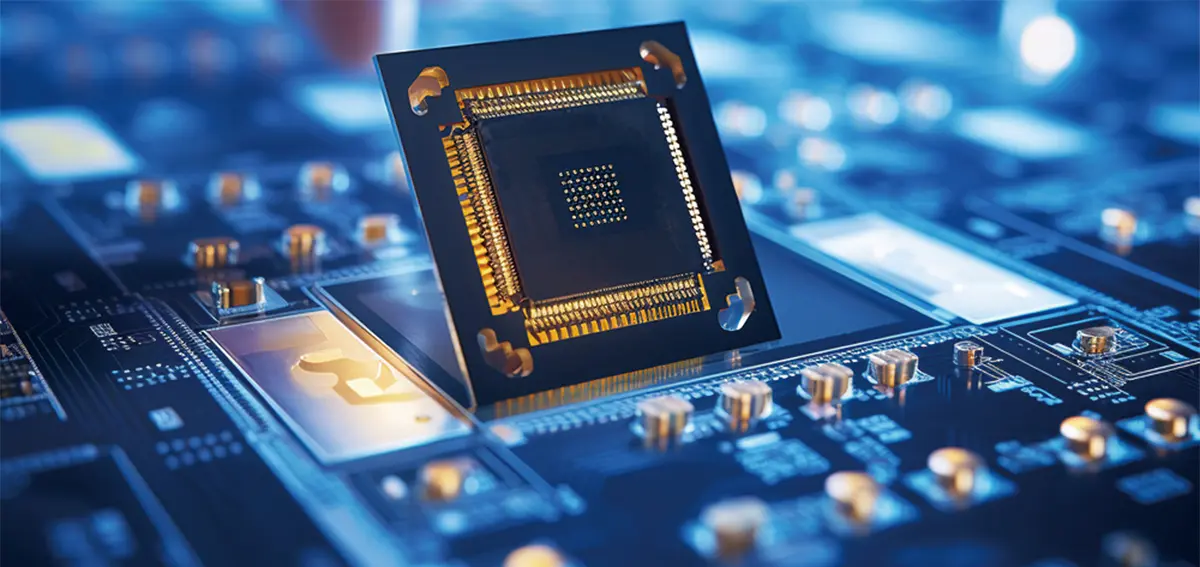
Supported by more than 30 technical R&D personnel, with an annual investment exceeding 15 million Yuan. Stpete holds 21+ research and development utility patents, driving innovation in fiber connection and micro-miniature connectors.
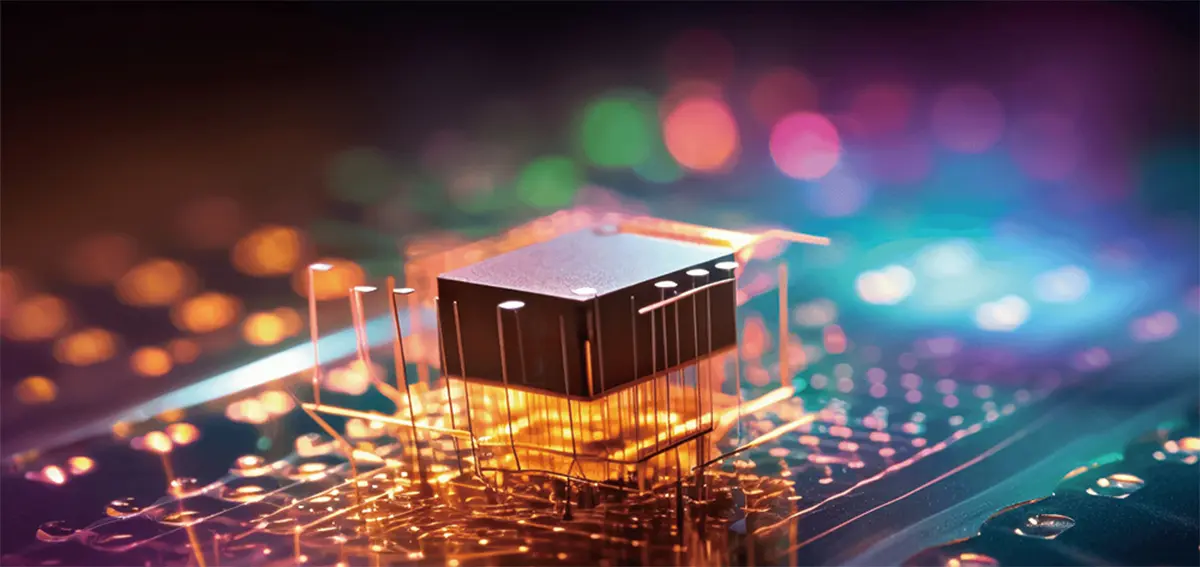
From initial raw material selection to automated optical inspection (AOI) on the line, we verify tolerance metrics. Mechanical stresses, insertion losses, and lifecycle mating limits are continuously analyzed in our test lab.

Deploying state-of-the-art insert molding, CNC micro-milling, and automated product assembly. Automated systems help to ensure structural repeatability and high volume output to meet large enterprise procurement orders on time.
The global digital footprint is experiencing exponential expansion, catalyzed by artificial intelligence (AI) model training, big data operations, and the transition toward 800G and 1.6T networking architectures. These higher optical bandwidth backplanes require dense switch and patch environments, where spatial optimization is a top priority.
In standard data center design, the network adapter interfaces act as the primary interface points between incoming fiber optic cabling and optical transceivers. Implementing flangeless (without hat) adapters is critical because:
As the market transitions toward Co-Packaged Optics (CPO) and Near-Packaged Optics (NPO) layouts, the demand for precision sub-miniature interfaces will continue to rise. Wenzhou Stpete Electronics remains committed to scaling our production capacities to support these new technology horizons.
Answering common integration, standards, and engineering questions from global purchasers.
A: The primary advantage is port density. Standard flanged adapters require spacing for screws and flange tabs, which wastes space. Flangeless adapters use internal clips or standard panel mounts, allowing them to be aligned flush against each other. This enables designers to squeeze 24 to 48 additional LC ports into a standard patch panel.
A: High-quality flangeless adapters utilize robust stainless-steel spring clips. These clips lock the adapter body securely into the panel cutout, preventing shifting. Wenzhou Stpete designs and tests these adapters to withstand pulling forces up to 100 Newtons, satisfying international telecom requirements.
A: CE certification requires compliance with low-voltage directives (where applicable to structural grounding), RoHS directive 2011/65/EU (heavy metals restrictions), REACH compliance, and compliance with the international IEC 61754 series governing optical connector interfaces and environmental profiles.
A: Zirconia ceramic features higher hardness, elastic memory, and dimensional stability over temperature swings. It aligns the 9-micron cores of single-mode fibers with tolerances of <0.5μm, resulting in lower insertion loss. Phosphor bronze is typically reserved for multimode applications where tolerances are less demanding.
A: Yes. With over 30 R&D personnel, an in-house tooling workshop, and high-precision CNC equipment, we can customize housing designs, print custom logos, provide custom color codings (e.g., aqua for OM3, violet for OM4, lime green for OM5), and integrate internal shutters for eye-safety requirements.
A: Standard orders are processed within 15 to 30 days, depending on quantities. Our automated assembly systems and structured ISO 9001 logistics processes ensure reliable manufacturing schedules. Shipping documents conform with export customs mandates for Europe, the Americas, and Asia.
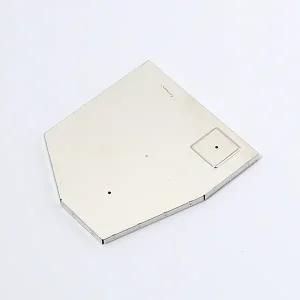
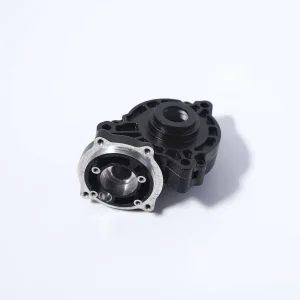
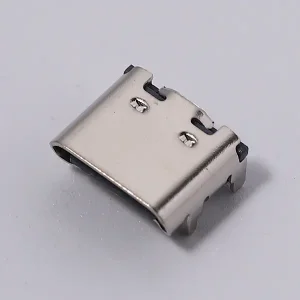
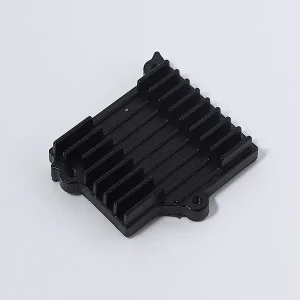
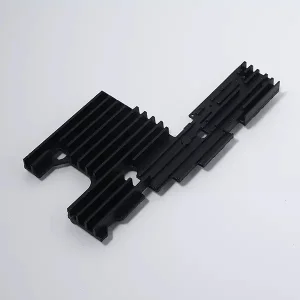
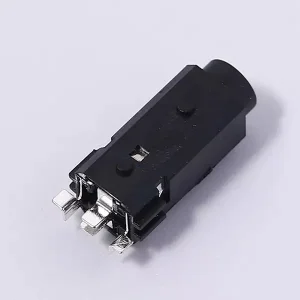
Explore our complete product catalog, featuring heatsinks, type-c connectors, headphone jacks, and switches.
 Stpete Electronics