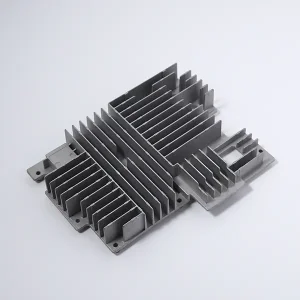
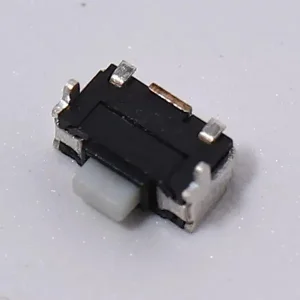
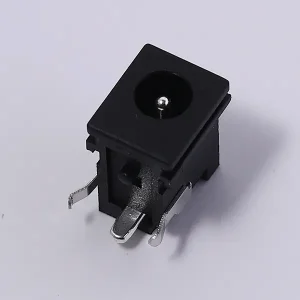
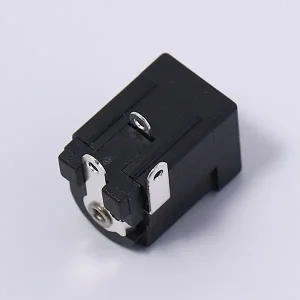
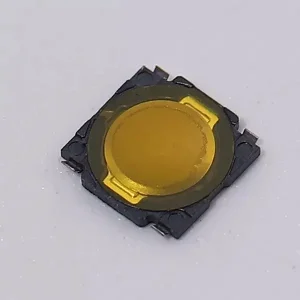
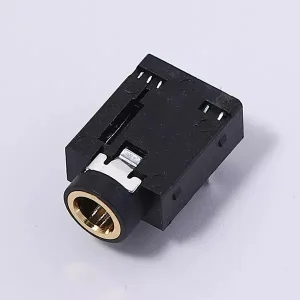
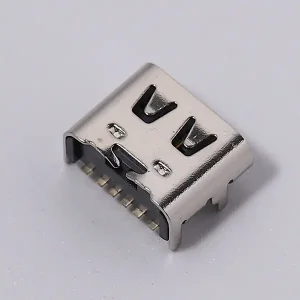
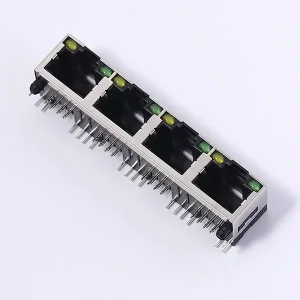
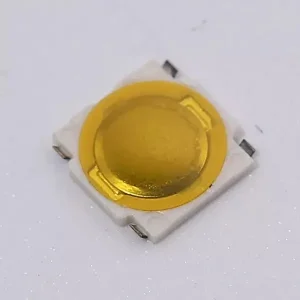
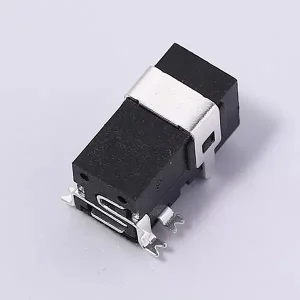
Explore our curated selection of ultra-reliable tact switches, DC jacks, and precision headphone connectors engineered to comply with European safety directives and international performance standards.
In the modern era of smart devices, industrial automation, and automotive electrification, the tactile switch has transitioned from a trivial mechanical contact to a high-precision, safety-critical Human-Machine Interface (HMI). A single tact switch serves as the touchpoint of user interaction, establishing the perceptual signature of product quality, tactile response, and acoustic engineering.
Global engineering design groups demand strict compliance parameters, leading with CE Certification. For Western European and global markets, the CE mark is not a decorative label; it is a foundational legal mandate validating compliance with safety, health, and environmental preservation requirements. Wenzhou Stpete Electronics Technology Co., Ltd. answers this call with systematic, trace-verified production control architectures.
Our CE-certified switch arrays guarantee contact bounce profiles of less than 5ms, contact resistance profiles below 100mΩ, and dielectric breakdown thresholds exceeding 250V AC/minute. This delivers uncompromising mechanical integrity across extreme thermal thresholds (-40°C up to +85°C).
By designing and fabricating using dynamic phosphorus-bronze or stainless-steel internal domes, our R&D squads manipulate force displacement profiles to generate crisp tactile snaps (operating force ranges ranging from 1.0N, 1.6N up to 2.5N depending on integration variables).
Established in 2005, we have solidified our market presence as an authoritative, high-tech engineering enterprise specializing in high-precision electronic connectors and tactical switches.
Industry Manufacturing Legacy
Custom Engineering Completions
Full-Time Production Engineers

At Stpete, quality control is not an isolated terminal step—it is the foundational baseline of our entire operations pipeline. Backed by ISO 9001, ISO 14001, and ISO 45001 system implementations, our manufacturing floor relies on multi-axis automated optical inspection (AOI) units, physical cycle life testers, and automated stamping systems.
We deploy a systematic inspect-and-reject workflow at every junction of raw copper pressings, insert molding, dome placement, and seal curing, ensuring that finished batches exhibit zero-defect characteristics when shipped to elite partners including Huawei, Hisense, and other global tier-1 equipment integrators.
As IoT, medical diagnostics, and smart wearables shrink, switches must keep pace. The market continues to evolve from standard 6x6mm profiles toward ultra-thin 3x2mm packages, requiring highly accurate automated insert molding processes. Stpete maintains specialized tooling systems to generate consistent, sub-millimeter polymer structures that retain high thermal resistance during SMT reflow profiles.
Modern premium automotive controls require precise acoustic design. Switch clicks must sound damp yet distinct, signaling positive switch engagement without high-frequency resonance. Through finite element simulation of internal dome structures, our engineering lab optimizes force-stroke ratio curves to meet strict corporate sound standards.
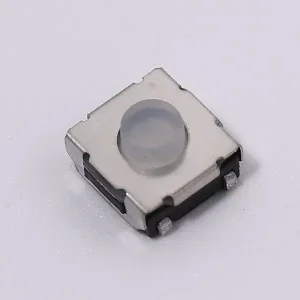
Exposed HMIs demand reliable ingress defense against dust and water. Stpete offers IP67 and IP68 tact switch alternatives, employing premium silicone rubber membranes co-molded directly with the terminal body. This process resists external fluid intrusion while maintaining tactile feedback across hundreds of thousands of operations.
In automated pick-and-place lines, component stability is essential. Poor tape-and-reel packing or terminal coplanarity deviations of more than 0.1mm can halt SMT lines. At Stpete, we employ automated laser-gauging systems during final inspection to guarantee coplanarity, reducing manufacturing downtime on customer assembly lines.
Every engineering breakthrough is backed by investment in state-of-the-art diagnostic machinery and material science laboratories.

Precision Diagnostics Lab
Conducting rigorous optical projection measurements and dynamic lifecycle verification tests.

High-Speed Stamping Shop
Forming micro-miniature lead frames with tolerances controlled within the single-digit micron range.
Automation Development
Developing customized robotic assembly cells to streamline inline insert-molding operations.
The logistical challenge of sourcing electromechanical hardware from offshore manufacturing centers frequently exposes procurement chains to non-conformity risks. Component failures on high-density PCBs can jeopardize expensive hardware assemblies.
Our product lines undergo strict testing to ensure zero-trace levels of restricted substances under current RoHS recast directives and REACH SVHC declarations. This guarantees hazardous-free electronic assemblies for consumer distribution.
By utilizing advanced Liquid Crystal Polymers (LCP) and high-grade polyphenylene sulfide (PPS) formulations, our tact switch bodies withstand standard lead-free peak temperatures of 260°C during automated reflow profiles.
Furthermore, our technical team provides rapid design integration support, supplying 3D CAD step files, detailed component drawing files, and material composition breakdowns. This helps product designers streamline initial evaluation phases and accelerate production timelines.
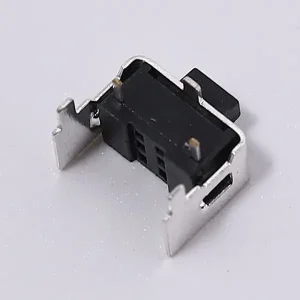
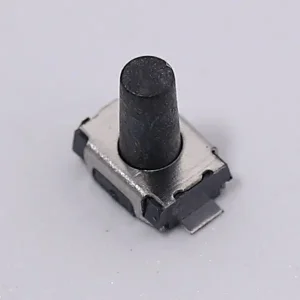
Review our high-performance models, built with micro-contact configurations to deliver long-term durability for demanding consumer and industrial electronic interfaces.
As electronic architectures become increasingly complex, Wenzhou Stpete Electronics Technology Co., Ltd. continues to advance its technological capabilities. Our long-term R&D investments focus on transitioning standard mechanical contacts into integrated, smart tactile interfaces.
Standard domes can degrade over extended use, resulting in a loss of responsiveness. To address this, we are exploring thin-film alloy compositions designed to maintain elastic profiles past 5 million cycles. This ensures reliable feedback throughout the operating life of industrial control consoles and specialized medical devices.
To support cleaner electronics assembly, our engineering team is developing press-fit terminal configurations. These allow solder-free mechanical connection directly to copper-lined PCB vias, eliminating reflow heat stress and improving production throughput for tier-1 automotive manufacturing partners.
Find detailed technical answers to common queries regarding mechanical performance, safety testing, and automated assembly.
CE certification requires validation against relevant European harmonized standards, including EN 60947-1 (low-voltage switchgear generic parameters) and EN 60947-5-1 (control circuit devices and switching elements). Environmental testing must verify electrical contact safety under load, creepage distance clearances, insulation resistance, and mechanical wear resilience. Wenzhou Stpete Electronics conducts these validation tests within fully certified, audited test labs, providing trace-verified declaration papers for every production batch.
Coplanarity refers to the maximum distance between the lowest and highest terminal points when the switch rests on a flat plane. If this variation exceeds 0.1mm, SMT soldering failures such as open circuits, bridging, or tombstoning can occur. Stpete maintains coplanarity tolerances within 0.08mm through continuous inline laser inspection during carrier tape-and-reel packing. This minimizes automated assembly errors on customer lines.
Our KFC Tactile Switch series utilizes a stainless-steel or phosphor-bronze contact dome selectively clad with silver or gold alloy over nickel plating. Silver-plated contacts offer exceptionally low contact resistance (typically <50mΩ) and excellent thermal transfer. For harsh environments exposed to potential sulfur corrosion, we offer gold-plated contacts to prevent oxidation and ensure reliable low-current switching over millions of operating cycles.
Tactile feedback is determined by the click ratio, defined as: (Operating Force - Contact Force) / Operating Force. A ratio between 40% and 60% delivers a crisp tactile snap. The operating lifetime depends on the material composition of the dome, actuation stroke (typically 0.25mm), and the distribution of actuation forces. We utilize computer-controlled press tooling to maintain uniform tension across every batch, ensuring consistent performance over extended lifecycles.
Yes. Our tooling facility can adjust mold configurations to provide custom stem lengths ranging from 3.0mm to 15mm or create customized operating forces (ranging from 1.0N up to 3.0N) to match specified target force profiles. We work directly with customer engineering teams to develop, prototype, and manufacture custom solutions tailored to specific application requirements.
Absolutely. In compliance with European REACH requirements and the RoHS Directive, we employ strict material screening at our incoming material stations. Every component batch is certified free of polybrominated biphenyls, lead, mercury, cadmium, and hexavalent chromium. This ensures safe, environmentally compliant integration into high-density consumer, industrial, and medical systems.
 Stpete Electronics