 Stpete Electronics
1 / 1
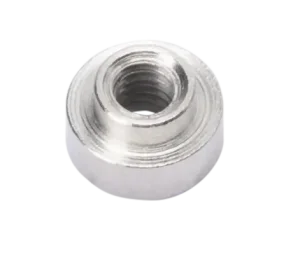
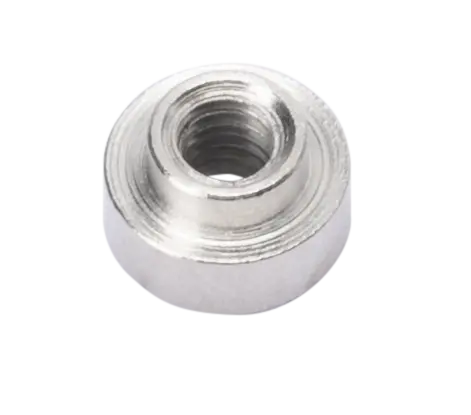
As a special category in the field of mechanical fasteners, round nuts, with their perfect combination of annular structure and precision threads, have become a core solution for positioning and locking shaft parts. Their all-round design can closely fit the shaft shoulder, and when combined with the anti-loosening groove of the stop washer, they can maintain stable locking under high-speed rotating conditions, making them particularly suitable for key components requiring axial positioning such as motor shafts and gearbox spindles.
The product adopts a graded material system: 45# carbon steel, after quenching and tempering, has a hardness of HRC28-32, suitable for general machinery with medium loads; the 3Cr13 stainless steel version has excellent corrosion resistance, which can cope with shaft fixing in humid or corrosive environments; for high-temperature working conditions, 1Cr18Ni9Ti material is selected, which can maintain stable mechanical properties below 300℃. All round nuts adopt precision rolled thread technology, with thread accuracy reaching grade 6g, and the fitting clearance with shaft parts is controlled between 0.01-0.03mm to ensure positioning accuracy.
Surface treatment processes are customized according to application scenarios: blackening treatment forms an oxide film, enhancing wear resistance and being suitable for concealed installation; galvanizing and passivation processes improve salt spray resistance to more than 72 hours, suitable for outdoor equipment; for special fields such as food machinery, electrolytic polishing treatment is adopted, with surface roughness Ra≤0.8μm, meeting hygiene standards.
To adapt to different shaft diameter requirements, the product covers full specifications from M10 to M100. Among them, M16-M50 models are equipped with double-groove stop structures, which can achieve two-way anti-loosening through stop washers; large-size models above M60 are additionally provided with lifting screw holes, facilitating the installation and commissioning of heavy equipment. Each nut undergoes strict dimensional inspection and torque testing before leaving the factory, ensuring consistent quality. The smooth thread entry design reduces installation resistance, enabling quick and accurate fitting even in narrow spaces. From the axial locking of machine tool spindles to the bearing positioning of wind power equipment, round nuts, with their high-precision positioning and reliable locking performance, have become indispensable key components in shaft system assembly, ensuring the stability and safety of equipment during long-term operation.
Round nuts are designed to position and lock shaft parts securely. Combined with stop washers, they prevent loosening under high-speed rotation. They are widely used for key components requiring axial positioning, such as motor shafts, gearbox spindles, machine tool spindles, and wind power equipment.
They are available in three graded materials: 45# carbon steel (quenched and tempered, HRC28-32) for medium-load machinery; 3Cr13 stainless steel for corrosion resistance in damp environments; and 1Cr18Ni9Ti stainless steel for high-temperature operations below 300℃.
All round nuts are manufactured using precision rolled thread technology. The thread accuracy reaches grade 6g, and the fitting clearance with shaft parts is kept between 0.01-0.03mm to ensure precise positioning.
We customize surface finishes based on application: blackening for wear resistance in concealed setups; galvanizing and passivation for outdoor use (withstanding 72+ hours of salt spray); and electrolytic polishing (Ra≤0.8μm) for sanitary applications like food machinery.
Yes. Specifications span from M10 to M100. Sizes M16-M50 feature a double-groove stop structure for two-way anti-loosening. Sizes above M60 are designed with additional lifting screw holes to assist in handling and installing heavy equipment.
Each round nut undergoes strict dimensional inspection and torque testing prior to shipment. Additionally, they feature a smooth thread entry design to reduce friction and ease installation in confined spaces.