Explore our signature range of industrial connectors, audio-visual interfaces, and tactile switching elements engineered for critical applications.
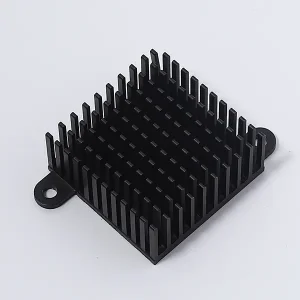
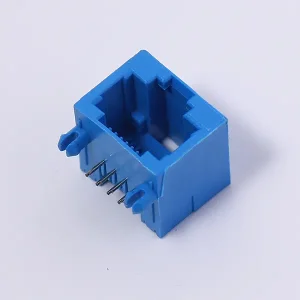
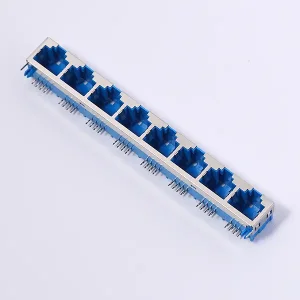
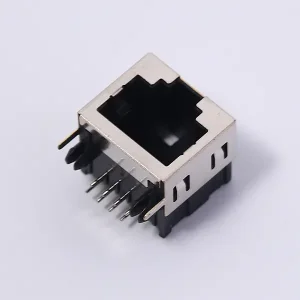
As microelectronics scale down and computational performance demands multiply, thermal management has evolved from a secondary mechanical consideration into a primary architectural design constraint. In high-power semiconductor installations, telecom base stations, and electric vehicle (EV) drivetrains, thermal energy accumulation directly dictates hardware lifespan and system MTBF (Mean Time Between Failures). Custom extruded profile heat sinks represent the global baseline for cost-efficient, high-performance passive thermal dissipation.
Aluminum extrusion offers unmatched geometric versatility, structural integrity, and thermal efficiency. By forming highly complex fin configurations under extreme extrusion pressures, thermal engineers maximize the surface area exposed to ambient airflow without introducing excessive mass or aerodynamic resistance. As a leading manufacturer and exporter, Wenzhou Stpete Electronics Technology Co., Ltd. meets this demand by integrating thermal extrusion capabilities directly alongside high-performance connector production to service global electronics ecosystems.
"The choice of extrusion alloy, fin-to-gap ratio, and post-machining flatness tolerances determines the difference between operational stability and catastrophic thermal runaway in 5G RF power amplifiers."

Delving into the thermal properties, material configurations, and geometries that define superior thermal performance.
Aluminum alloy 6063 remains the industrial standard for heat sink extrusion due to its superior thermal conductivity (~201 W/m·K) and excellent surface finish capabilities. For structural environments demanding higher tensile strength, alloy 6061 (~166 W/m·K) is applied, though it compromises thermal transfer efficiency slightly.
The core determinant of passive cooling efficiency is the fin aspect ratio (height relative to the gap width). Standard extrusion methodologies allow aspect ratios up to 8:1 or 10:1. Advanced precision dies pushed by high-tonnage extrusion presses at Stpete achieve ratios up to 15:1 for dense packaging designs.
Anodizing (clear, black, or color) is critical not just for corrosion protection but for increasing surface emissivity. A black-anodized heat sink exhibits up to 30% higher radiation heat dissipation under purely passive, natural convection conditions compared to bare, unfinished aluminum.
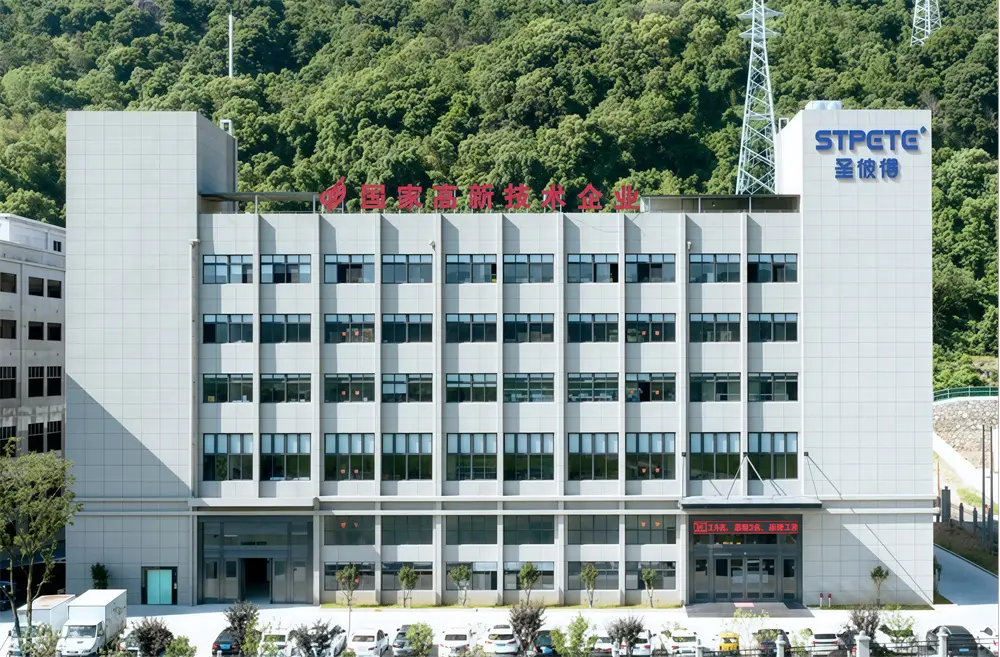
Wenzhou Stpete Electronics Technology CO., LTD was established in 2005. We are a high-tech enterprise specialized in the development, production, and sales of electronic connectors and thermal dissipation units. Over the span of two decades, we have built an unimpeachable reputation among customers at home and abroad for excellent product quality and highly responsive, efficient trading services.
To ensure high accuracy and reliability, we employ a full suite of modern hardware including high-level stamping machines, precision CNC centers, and high-accuracy dimensional test inspection tools. These systems allow us to produce high-tolerance RF Terminals, RJ45 and TYPE-C jacks, and complex aluminum heat sinks to exact OEM print specifications. Our QA team manages strict inspections at every single phase—from incoming raw material validation (IQC) to in-process audits (IPQC) and final pre-shipment tests (FQC)—preventing factory seconds and ensuring defect-free delivery.
We hold certifications for ISO 9001:2015, ISO 14001, and ISO 45001, alongside ownership of multiple proprietary patents. Through decades of technological investment, we collaborate directly with tier-one electronics brands in China and globally, including industry leaders like Huawei and Hisense.
Inside our systematic approach to product development, materials science, and scalable automated manufacturing.
Supported by more than 30 dedicated technical R&D personnel. We maintain an annual R&D investment exceeding 15 million RMB, driving the filing and validation of 21+ research and development patents to keep our product range at the bleeding edge of the electronic connectivity and thermal management sectors.
For Stpete, quality is a core asset. Guided by rigorous technology and based on safety, every stage is meticulous—from the selection of verified raw extrusion billets and copper wire polymers to active production-line verification and high-stress environmental test chambers.

We leverage advanced insert molding, finished-product automated assembly, and high-capacity CNC operations. Believing firmly that technological innovation is the primary driver of development, we continuously acquire high-speed progressive die tooling and automated testers to enhance output scalability.
Anticipating next-generation electronic requirements and the structural evolution of passive thermal interfaces.
As industrial components transition toward higher current tolerances and unified system-on-chip architectures, standard planar heat sinks encounter physical dissipation ceilings. The future roadmap hinges on three main vectors:
Stpete Electronics is positioning its design teams to integrate these features directly into customized OEM projects, ensuring foreign buyers can access highly integrated packaging solutions from a single, reliable exporter.

Behind every precision component is a team aligned around operational excellence. Stpete regularly organizes comprehensive team-building activities, bringing together engineering, administrative, and frontline manufacturing teams to build cohesion and strengthen communication channels. Removing organizational silos ensures that product designs conceived in the R&D lab transition smoothly and error-free to the factory floor.
Our collaborative environment directly translates to customer value. High communication efficiency minimizes lead times on custom tooling modifications, facilitates dynamic troubleshooting, and ensures that complex exporting documentation is handled accurately and on schedule.
"Cohesion on the team-building field fosters seamless execution on the factory floor. We believe our human resource investments are direct indicators of our final quality assurance reliability."
— Stpete Operations Directorate
Answering crucial thermal engineering questions about extruded heat sink parameters, tolerances, and design guidelines.
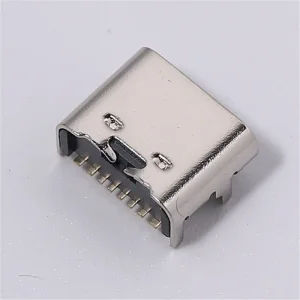
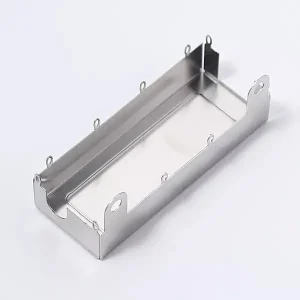
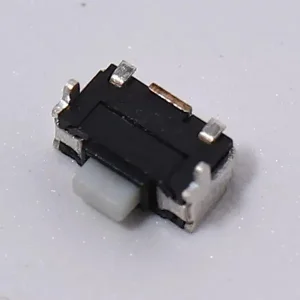
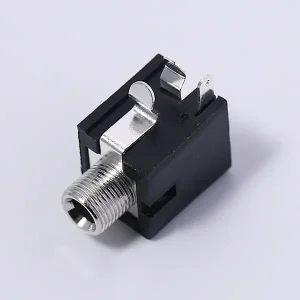
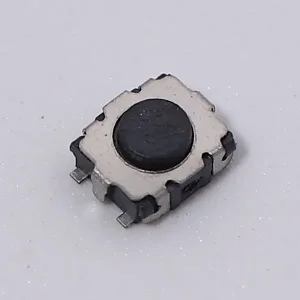
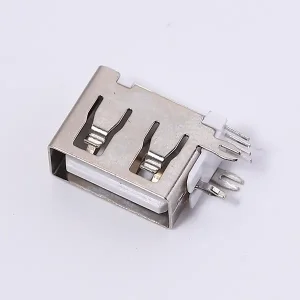
Review our specialized hardware listings including DC power ports, Type-C modules, tactile switches, and high-frequency components.
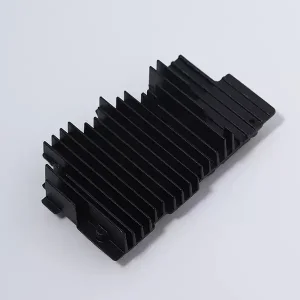
 Stpete Electronics