OEM Custom Shielding Cover Factories & Exporter

High-Precision Electromagnetic Interference (EMI/RFI) Board-Level Shielding Solutions Built on 20+ Years of Manufacturing Excellence

Featured Electronic Connectors & Switches

Precision-engineered components directly exported from our state-of-the-art Chinese manufacturing facilities to global industrial partners.
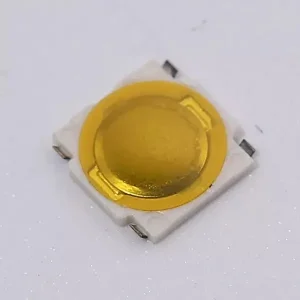
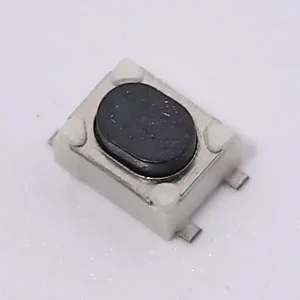
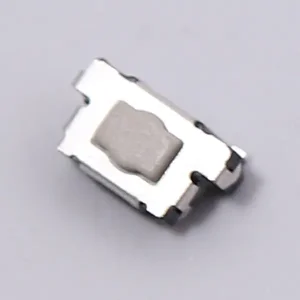
China KFC Tactile Switch2R10-3 Exporters

China KFC Tactile Switch2R10-3 Exporters, Exporter

View Details
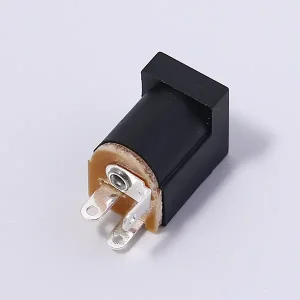
China DC012-2.0 Copper Manufacturers

China DC012-2.0 Copper Manufacturers, Factory

View Details
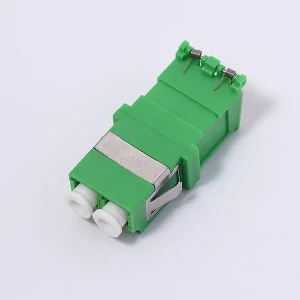
China SC-APC-SM-02 Factories

China SC-APC-SM-02 Factories, Exporters

View Details
OEM KFC Tactile Switch 2A3-06

OEM KFC Tactile Switch 2A3-06 Manufacturer, Exporter

View Details
CE Certification P-1949-A

CE Certification P-1949-A Factories, Exporter

View Details
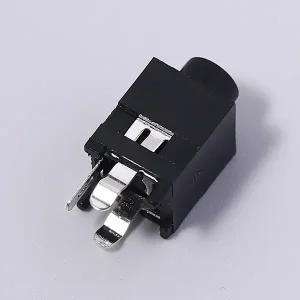
CE Certification PJ Headphone Jack-215

CE Certification PJ Headphone Jack-215 Suppliers, Manufacturers

View Details
CE Certification USB Connector -05

CE Certification USBConnector -05 Suppliers, Manufacturers

View Details
OEM USB Connector -01

OEM USB Connector -01 Factory, Exporter

View Details

Corporate Foundations

Established in 2005, Wenzhou Stpete Electronics Technology Co., Ltd. has grown into an industry-leading high-tech enterprise. We specialize in the R&D, manufacturing, and export of high-end electronic connectors, custom board-level shieldings, and specialized component solutions.

Elite Certification & Patents

Guided by rigid international frameworks, we hold active certifications for ISO 9001, ISO 14001, and ISO 45001. Backed by 21+ design and utility patents, our customized EMI shielding structures protect delicate circuits in the most demanding conditions.

Tier-1 Brand Partnership

We work collaboratively with global tech giants and national leaders including Huawei and Hisense. Our shielding covers meet rigorous automotive, medical, and aerospace-level frequency attenuation specifications.

20+
Years Industry Experience
500+
Project Completion
200+
Professional Employees
15M+
Annual R&D Investment (RMB)

Engineering Custom Shielding Covers for High-Frequency Integrity

A technical guide on EMI/RFI suppression, localized compliance, and global supply chain strategy for modern hardware engineers.

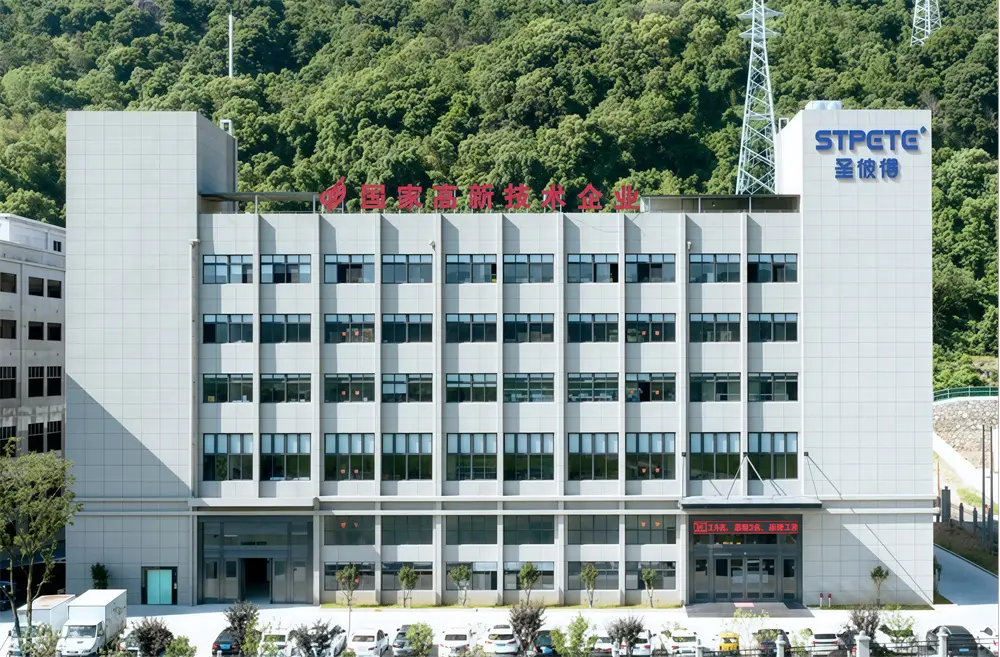
Stpete Factory Facility
R&D Department at Wenzhou Stpete Electronics

Understanding Electromagnetic Interference (EMI) in Next-Generation Electronics

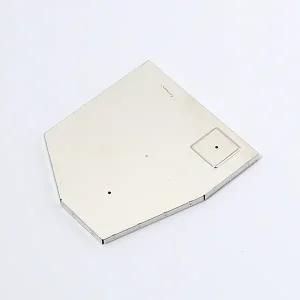
As microprocessors speed up and wireless communications integrate more frequencies (e.g., 5G, Wi-Fi 6E/7, and Bluetooth Low Energy), board-level electromagnetic compatibility (EMC) is now a primary engineering bottleneck. A board-level shielding (BLS) cover, also known as an EMI shielding can, is the first and most cost-effective line of defense. By isolating critical processing units, RF modules, and amplifiers directly on the PCB, engineers can prevent both internal cross-talk and external radiated emissions.

Historically, generic shielding components could satisfy basic shielding requirements. However, today's compact designs, such as ADAS radar boards, IoT transceivers, and high-density telecom motherboards, require custom-engineered shielding covers. These custom enclosures must optimize thickness, material choice, thermal management vents, and SMT coplanarity to ensure both electrical attenuation and assembly yield.

Material Selection: The Physics Behind Effective Attenuation

Choosing the correct alloy is fundamental to structural stability and electrical performance. At Wenzhou Stpete Electronics, our materials group processes several key alloys depending on the custom OEM specification:
  • Nickel Silver (C7701/C7521): Known for excellent solderability, high corrosion resistance, and high permeability, nickel silver does not require post-stamping plating, making it highly cost-effective for medium to high volume runs.
  • Pre-Tin Plated Cold Rolled Steel (SPCC/SPTE): This material provides outstanding attenuation at lower frequencies and offers superior mechanical strength. The pre-tin plating guarantees reliable reflow soldering during SMT processes.
  • Stainless Steel (SUS 304/301): Ideal for environments requiring high mechanical protection and corrosion resistance. Solderability is lower, so it is often designed as a clip-on cover or combined with localized tin plating.
  • Copper Alloys & Beryllium Copper (BeCu): Typically selected for high-conductivity applications or where Spring finger properties are required in multi-piece shielding assemblies.
Quality Assurance Inspection of PCB Shielding Covers
Precision Quality Control Inspection and Microscopic Analysis

Technical Stamping Precision: Flatness and Coplanarity Controls

One of the primary failure modes in high-volume SMT (Surface Mount Technology) assembly is open joints or solder bridges beneath the shielding frame. If the bottom edge of the shielding cover is not perfectly flat, a gap will form during the reflow process, resulting in shielding failure or mechanical weakness.

Stpete implements rigorous coplanarity control of less than 0.08mm - 0.10mm across the entire perimeter of our custom shielding cans. Using high-speed progressive die stamping machines and CNC precision punch presses, we maintain uniform tension across the drawn corners. Every batch is validated through optical automated inspection (AOI) and 3D laser scanners before packaging in carrier tape (tape-and-reel) to allow automated pick-and-place assembly.

Global Sourcing Strategy: The Chinese Factory Advantage

Why Tier-1 hardware brands source their custom EMI components from integrated Chinese manufacturing hubs.


Advanced Insert Molding and Automated Assembly Line
Team Building Activity for Enhancing Collaboration and Innovation

Integrated Supply Chain & Rapid Tooling Iteration

Sourcing OEM custom shielding covers from Wenzhou, China, offers a significant speed-to-market advantage. Our localized manufacturing ecosystem allows us to compress tooling design, raw material procurement, and progressive die fabrication into a fraction of the time required by Western toolmakers. Stpete provides a full service cycle: from initial DFM (Design for Manufacturing) review and FEA simulation, through custom prototype stamping (using soft tooling), to high-volume progressive die runs.

Our facility integrates tool design, stamping, insert molding, and automated packaging under one roof. This minimizes transportation delays and removes the communication overhead common with multi-tier subcontractors.

Localization Support & Rigorous Compliance Assurances

Global logistics demand strict compliance with international trade and safety laws. Our technical support teams work closely with procurement managers globally to ensure seamless integration:

  • RoHS & REACH Compliance: All raw alloys and platings used in our custom shielding covers are fully certified lead-free and cadmium-free, meeting European and North American customs clearance standards.
  • Conflict Minerals Free: We maintain strict traceability of all raw copper, tin, and steel, ensuring no materials originate from conflict zones.
  • Document Support: We supply full PPAP (Production Part Approval Process) Level 3 documentation, IMDS filings for automotive projects, and detailed raw material mill test reports.
  • Flexible Logistics: With ready access to Shanghai, Ningbo, and Wenzhou ports, we handle DDP, CIF, and FOB terms with dedicated air-freight and ocean-freight forwarding networks.

Global Sourcing & Localized Application Scenarios

Custom EMI shielding covers are critical across several key industries:

1. Automotive Electronics (ADAS & Infotainment): Modern electric vehicles utilize complex sensor arrays, LiDAR, and radar modules that generate significant high-frequency noise. Our automotive-grade shielding covers are designed to withstand constant vibration and thermal shock cycles without cracking or delaminating from the PCB.

2. 5G Base Stations & High-Speed Telecom: Outdoor telecommunication systems face extreme weather and high RF power density. We design heavy-duty, multi-cavity shielding enclosures with integrated heat dissipation holes, allowing thermal transfer while maintaining target attenuation levels up to 40 GHz.

3. Smart Medical Devices: Implantable sensors and patient monitors require absolute EMI isolation to prevent life-threatening reading errors. Stpete produces ultra-clean, micro-stamped shielding cans under dust-controlled production zones to meet medical cleanliness guidelines.

Expert Q&A: Board-Level Shielding & Sourcing FAQ

Addressing critical design, material, and logistics queries for international hardware procurement teams.

Q1: What is the optimal thickness for a custom board-level shielding cover?
For standard board-level shielding, the typical thickness ranges from 0.15mm to 0.30mm. Standard consumer electronics often use 0.20mm thick nickel silver to balance weight, height constraints, and structural rigidity. Heavy industrial or automotive grade covers may scale up to 0.40mm or thicker to improve mechanical durability under heavy vibration.
Q2: Should I design a one-piece or a two-piece shielding cover?
One-piece shields are soldered directly to the board, offering the lowest cost and best sealing, but they require desoldering to access the enclosed components. Two-piece shields consist of a frame soldered to the PCB and a removable cover. This design is highly recommended for prototypes or components requiring tuning, calibration, or post-assembly maintenance, though it does carry a higher tooling and component cost.
Q3: How does Wenzhou Stpete Electronics guarantee a coplanarity of <0.08mm?
We use high-precision carbide progressive dies within automated punch presses. We monitor stamping pressures in real-time and run regular optical inspection scans during production. Special reinforcement ribs or fold-down edges are integrated into the design to prevent flexing during subsequent shipping and SMT handling.
Q4: Are ventilation holes or thermal cutouts allowed in an EMI cover?
Yes, thermal dissipation is a common requirement. Ventilation holes are permissible, but they must be smaller than the wavelength of the target interference frequency (generally, less than 1/10th or 1/20th of the wavelength) to prevent EMI leakage. Our engineering team uses electromagnetic simulation to determine the optimal hole pattern and size.
Q5: What is the typical tooling lead time and MOQ for custom orders?
Standard prototype tooling takes 10 to 14 days, while high-volume progressive stamping dies require 25 to 30 days for complete calibration. Our standard MOQ starts at 5,000 to 10,000 units depending on size, though we can accommodate smaller pilot runs for complex aerospace or medical projects.
Q6: Do you supply custom shielding covers on tape-and-reel packaging?
Yes. To facilitate automatic pick-and-place assembly on high-speed SMT lines, we design custom carrier tapes and reels in compliance with EIA-481 standards. Removable polyimide pick-and-place targets are placed on the center of the covers if they have venting patterns, ensuring vacuum nozzles can lift the parts securely.

Industrial Connector & Switched Solutions

Browse our expanded portfolio of CE certified audio jacks, interface connectors, and specialized RF switches.
CE Certification WYZ-A01-01 Manufacturers

CE Certification WYZ-A01-01 Manufacturers, Factories

View Details
CE Certification P-5661-G Suppliers

CE Certification P-5661-G Suppliers, Exporter

View Details
High-Quality 55A1X8 Factories

High-Quality 55A1X8 Factories, Factory

View Details
CE Certification SRX32-018-P7 Manufacturer

CE Certification SRX32-018-P7 Manufacturer, Factory

View Details
High-Quality KFC Tactile Switch Y1-02-2 Suppliers

High-Quality KFC Tactile Switch Y1-02-2 Suppliers, Exporters

View Details
High-Quality SRY17-021-P7 Suppliers

High-Quality SRY17-021-P7 Suppliers, Exporters

View Details
China SRX10-014B-P7 Factory

China SRX10-014B-P7 Factory, Exporters

View Details
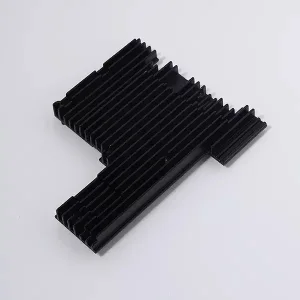
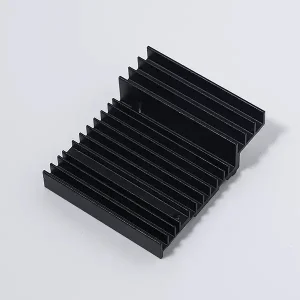
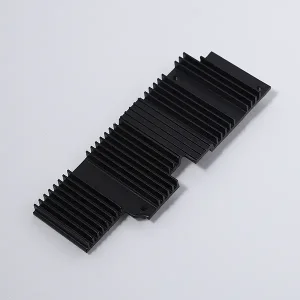
China Extruded Heatsink Supplier

China Extruded Heatsink Supplier, Factories

View Details