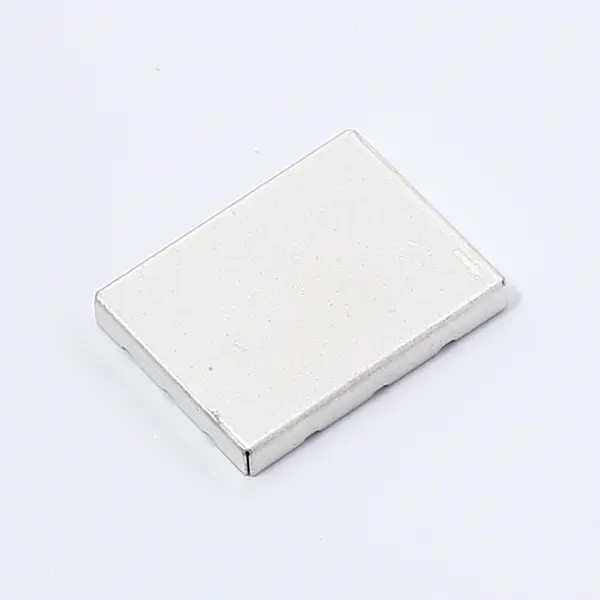
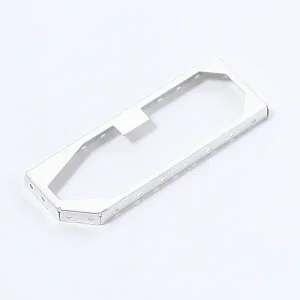
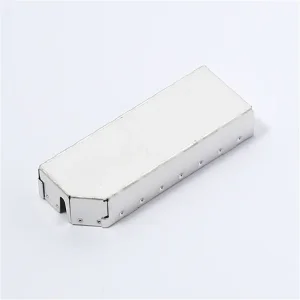
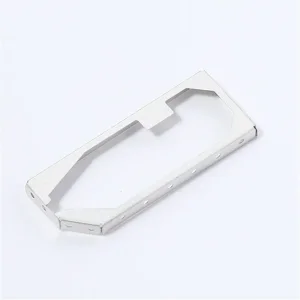
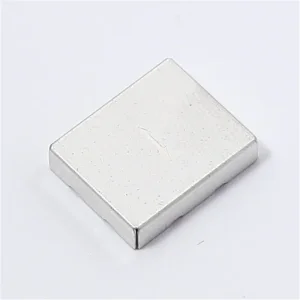
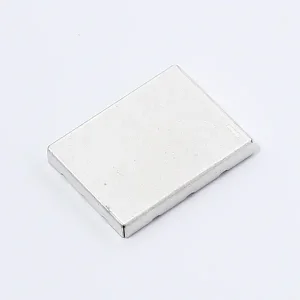
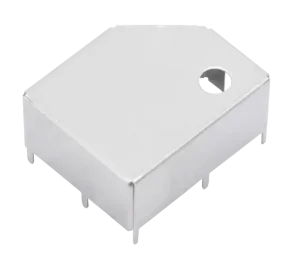
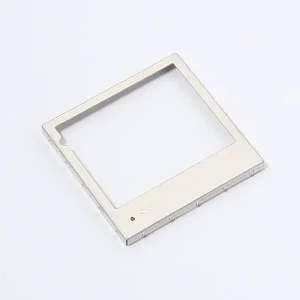
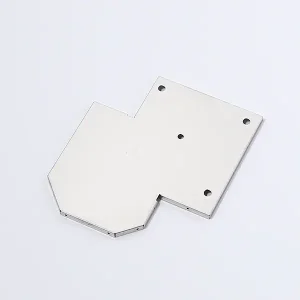
The shield can, an indispensable component in electronic devices, is mainly used for shielding electronic signals. Its core function lies in dual protection: it can effectively block external electromagnetic waves from interfering with internal circuits to ensure stable operation of the circuits; and it can prevent electromagnetic waves generated internally from radiating outward, avoiding impact on other devices.
It is widely used in many fields such as mobile phones, GPS and so on, playing a key shielding role for components on PCB boards and LCMs. In terms of material selection, common ones include 0.2mm thick stainless steel and nickel silver, among which nickel silver is favored for its easy soldering. In terms of structure, there are one-piece non-detachable types with low cost, and two-piece detachable types, which are convenient for research and development, testing and maintenance. In addition, the shield can is also equipped with structures such as ventilation holes for heat dissipation and air pressure balance, ensuring stable performance of the device in complex environments.
The shield can is a core component for electromagnetic compatibility in electronic devices, acting as an "invisible guardian" with excellent signal isolation. It bidirectionally blocks external stray signals (e.g., from base stations, industrial motors) to protect internal components (chips, sensors) from interference, while containing internal high-frequency waves to avoid disrupting nearby equipment—vital for densely packed systems.
Widely used in consumer electronics (smartphones shield radio frequency modules for stable signals), automotive electronics (protects EV radar from motor/battery interference), 5G base stations (reduces amplifier signal crosstalk), and medical devices (ensures accurate monitoring/MRI signals), it’s integral to diverse fields.
Material Dynamics & Structural Layout
Material choice defines performance. Nickel silver (Cu-Ni-Zn alloy) leads for high-frequency shielding, offering 20%+ IACS conductivity and strong solderability—ideal for PCB mounting. Stainless steel, with strength and corrosion resistance, suits industrial/outdoor use; aluminum alloy, lightweight, serves aerospace. High-end models use multi-layer composites (metal plating + insulation) for balanced shielding and insulation.
Structurally, one-piece cans (seamless, stamped) minimize wave leakage for small components. Combined types (base + cover, via buckles/screws) ease maintenance for frequently inspected modules. Precision 0.5-2mm ventilation holes balance heat dissipation (airflow) and shielding (electromagnetic "fences").
Manufacturing Precision & Surface Finishing
Manufactured via stamping (mass production, ±0.05mm precision), etching (fine patterns for high-density circuits), and surface treatments (nickel/gold plating for conductivity/oxidation resistance), shield cans are indispensable in modern electronics, ensuring safe, stable electromagnetic environments.
Frequently Asked Questions (FAQ)
What is the primary function of a shield can in electronics?
A shield can acts as a bidirectional barrier. It isolates sensitive internal components (like chips and sensors) from external electromagnetic interference and contains high-frequency waves generated inside the system to protect nearby electronic equipment.
Which applications commonly require the use of shield cans?
Shield cans are widely utilized in consumer electronics (smartphones), automotive systems (protecting EV radar from electrical noise), 5G base stations (preventing amplifier crosstalk), and medical diagnostic tools (ensuring accurate MRI and monitoring signals).
What are the benefits of choosing Nickel Silver for shield cans?
Nickel silver is preferred for high-frequency applications because it offers outstanding electrical conductivity (over 20% IACS) and superior solderability, which simplifies the PCB mounting process.
What is the difference between one-piece and combined shield can designs?
One-piece designs are seamless and stamped to provide maximum wave leakage prevention for small components. Combined types feature a separate base and cover secured by buckles or screws, facilitating easier maintenance and inspections.
How do ventilation holes affect shielding performance?
Precision ventilation holes measuring 0.5-2mm are designed to balance heat dissipation and shielding performance. They allow optimal airflow to cool internal parts while remaining small enough to block targeted electromagnetic frequencies.
What manufacturing methods are used to produce shield cans?
They are produced using high-precision stamping (typically within ±0.05mm tolerances for mass production) or chemical etching for complex configurations in dense circuitry, followed by surface plating (nickel or gold) to resist oxidation and improve electrical connection.
 Stpete Electronics