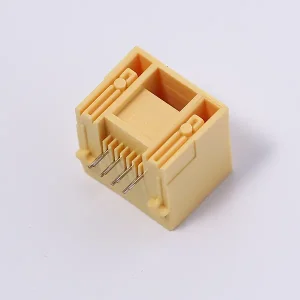
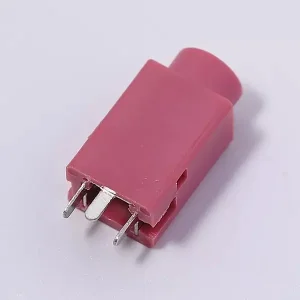
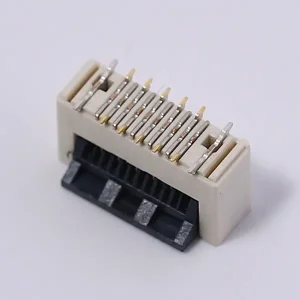
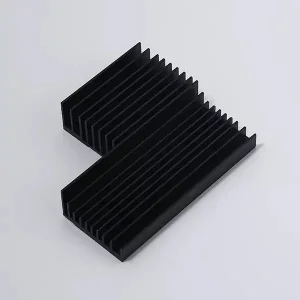
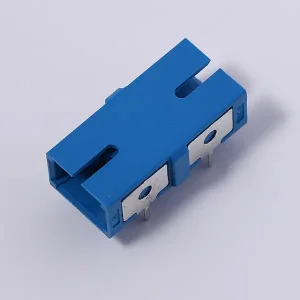
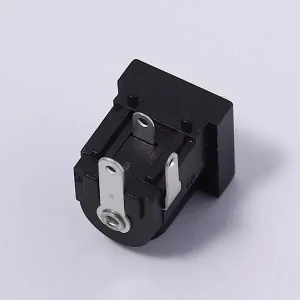
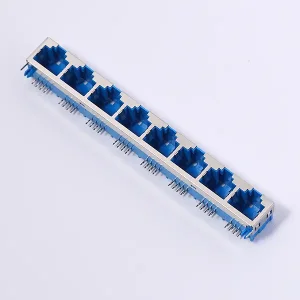
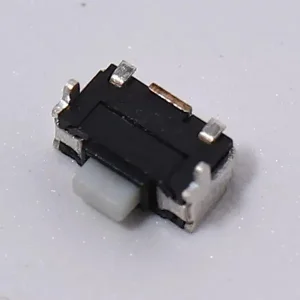
Established in 2005, Wenzhou Stpete Electronics Technology Co., Ltd. is an industry-leading high-tech enterprise dedicated to the R&D, advanced manufacturing, and global exportation of electronic connectors, custom thermal management components, and anodized aluminum plates. Driven by innovation, quality, and technical expertise, we have earned an outstanding reputation as a trusted manufacturing partner for top-tier global brands, including Huawei and Hisense.
Our operational footprint encompasses state-of-the-art production floors utilizing advanced precision stamping, automated insert molding, and multi-axis CNC machines to guarantee the high accuracy, consistency, and structural integrity of every component. We serve crucial sectors including consumer electronics, RF telecom modules, high-frequency signal systems, and automotive electronics, delivering integrated solutions that resolve complex engineering and heat management challenges.

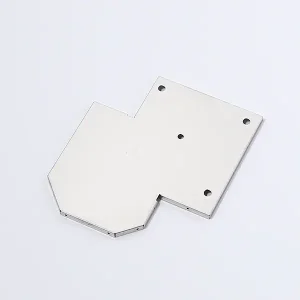
In modern electronic and electrical architecture, thermal management has transitioned from a supporting layout concern to a primary performance bottleneck. As computing density rises, components such as integrated circuits, high-power LED matrices, power converters, and RF transmitters generate substantial thermal energy that must be dissipated immediately to avoid degradation of signal path performance, junction overheating, and catastrophic component failure. Anodized heat dissipation aluminum plates are the standard solution to these structural issues, offering an optimized balance of low thermal resistance, electrical isolation, light weight, and high structural reliability.
Did you know? Anodization does not merely prevent corrosion; it fundamentally alters the thermal properties of the aluminum substrate. Anodized aluminum exhibits a surface emissivity ($\epsilon$) of up to 0.85, compared to raw polished aluminum which sits at a low 0.05. This marks a 1,600% increase in radiation cooling efficiency, which becomes the key factor in enclosed or static-convection electronics enclosures.
The thermal efficiency of an anodized plate relies on three distinct physical mechanisms: conduction through the aluminum substrate, convection via optimized surface profiles, and radiation facilitated by the controlled anodic oxide coating. Aluminum alloys such as AL6061 and AL6063 exhibit exceptional thermal conductivity, ranging from 160 to 220 W/(m·K). However, the interface between the aluminum and the adjacent air or mounting surface introduces a thermal resistance boundary.
The anodizing process creates a controlled, highly uniform aluminum oxide (Al₂O₃) barrier layer that transitions into a highly ordered hexagonal nanoporous surface. When engineered to precise thicknesses (typically 10 to 25 microns for thermal management panels), this porous structure increases the effective surface area at a microscopic scale. This microscopically textured boundary reduces boundary-layer air resistance, improving natural and forced convection coefficients. Furthermore, because Al₂O₃ is an electrical insulator, it offers high dielectric breakdown voltage resistance, allowing direct component mounting without external thermal pads, which typically add thermal resistance.
At Wenzhou Stpete Electronics, our manufacturing capabilities go beyond simple stamping. We operate high-level high-precision punching machines and multi-axis CNC processing centers capable of achieving dimensional tolerances within ±0.01 mm. Custom OEM heat dissipation plates require precise flatness tolerances (typically under 0.05 mm across the entire mating surface) to minimize microscopic air gaps between the semiconductor junction and the plate.
Our production engineering team works closely with global clients to develop custom configurations, including surface fin spacing, custom multi-level step designs, micro-channel layouts for hybrid liquid-cooling plates, and localized surface treatments. We integrate key manufacturing steps—including extrusion, precision shearing, CNC milling, surface deburring, mechanical brushing, and chemical anodizing—under one quality management protocol to guarantee defect-free production runs.
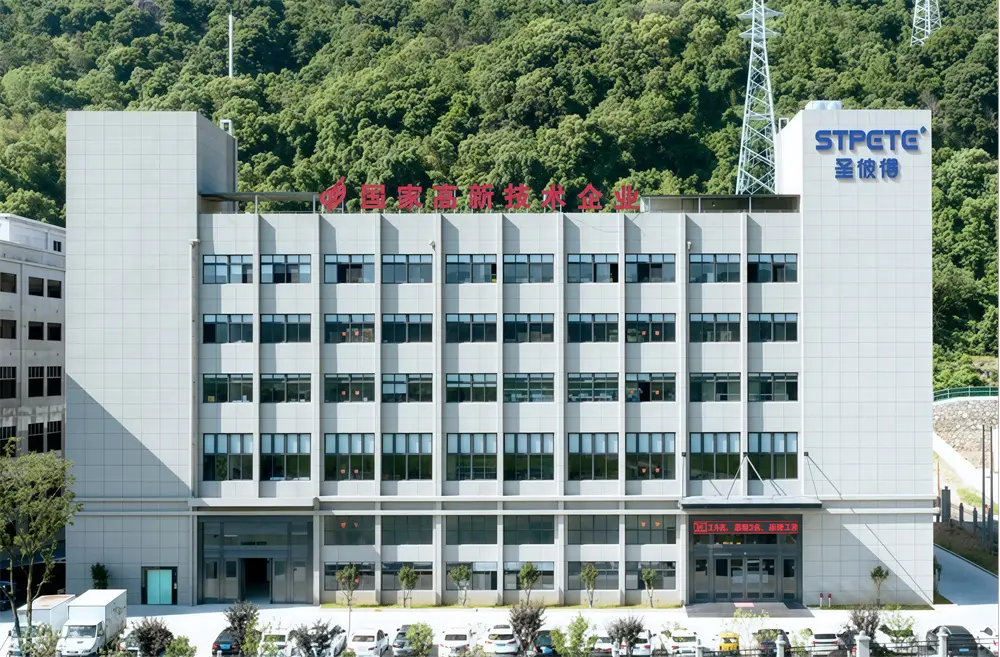
Wenzhou Stpete Electronics Technology Co., Ltd. has established a robust vertically-integrated manufacturing model designed to accelerate time-to-market while maintaining competitive price points. Our engineering operations are backed by a dedicated R&D division comprising over 30 technical specialists, supported by an annual innovation investment exceeding 15 million RMB. Our proprietary technological breakthroughs have earned us 21+ national patents, placing us at the forefront of the precision electronic components sector.
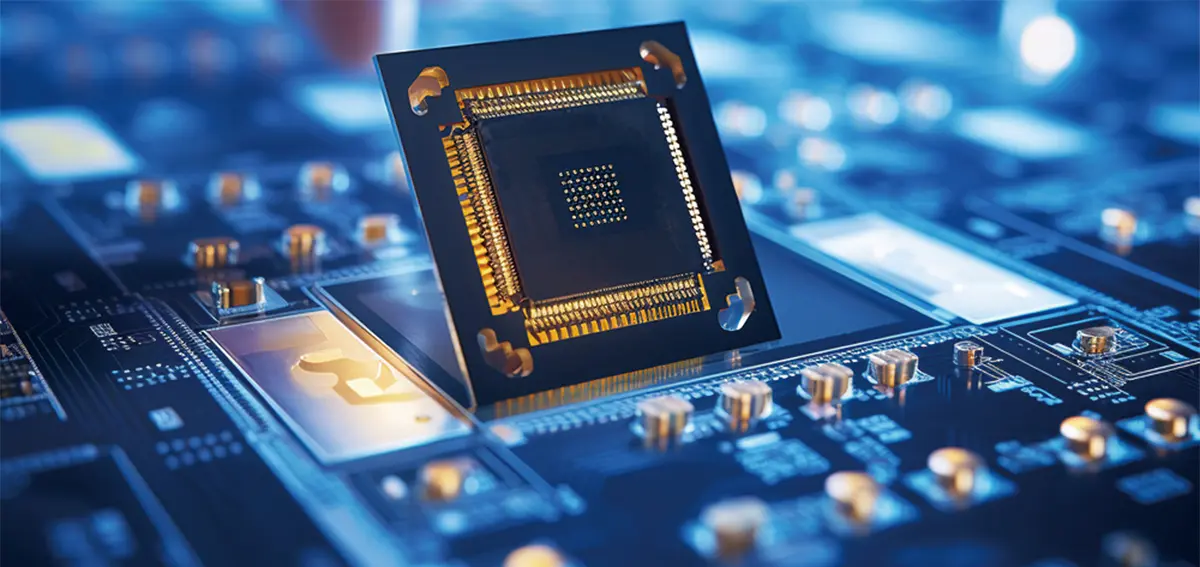
Our core R&D program focuses on high-speed signal integrity and advanced thermodynamics. We utilize state-of-the-art simulation software to analyze thermal profiles under transient loads, evaluating how heat transfers through our connector arrays and anodized plates. This allows us to optimize geometries before cutting tools, cutting prototyping cycles by up to 40%.
Our production quality control is structured to eliminate defects before products reach the packing line. From raw material ingestion to final anodization checks, our quality inspection engineers enforce a multi-phase testing protocol. We check chemical composition using spectrometers, measure anodic layer thickness with eddy-current gauges, and test surface flatnesses via laser-coordinate CMM systems.


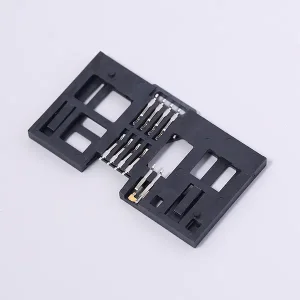
Operating a mix of high-speed progressive die-stamping lines, automated insert-molding machines, and high-precision terminal assembly systems, our facility is equipped for high-volume output. We design and manufacture all stamping dies and injection molds in-house, ensuring that the critical mating tolerances between our electronic connectors and the thermal dissipation backplates are engineered for optimal compatibility from day one.
Thermal management requirements differ significantly depending on the operating environment and industry-specific regulations. Our specialized heat dissipation plates are engineered for a variety of demanding applications:
In today's global market, securing a stable component supply line requires strict adherence to environmental regulations and international manufacturing standards. Wenzhou Stpete Electronics provides complete documentation support to streamline import processes for our global clients:
Environmental Regulatory Compliance: All materials used in our fabrication processes, including our anodization chemical seals, are certified in accordance with RoHS (Restriction of Hazardous Substances) and REACH (Registration, Evaluation, Authorisation and Restriction of Chemicals) directives. We support global green manufacturing initiatives by verifying the absence of heavy metals or hazardous compounds in our final products.
Global Logistics and Custom Support: We operate efficient logistics pipelines with quick access to major ports (such as Ningbo and Shanghai). We supply full customs-declaration support, including country-of-origin certificates, material test reports (MTRs), and product safety data sheets, ensuring smooth import customs clearance in the European Union, North America, and Southeast Asia.

At Wenzhou Stpete Electronics, we believe that technological innovation is built on a foundation of strong teamwork and shared core values. Our organization prioritizes continuous professional development, safety in the workplace, and regular team engagement initiatives. This focus on corporate culture helps us maintain low personnel turnover rates, keeping specialized manufacturing knowledge within our production lines.
Each year, our company organizes outdoor team-building activities in natural settings to strengthen cohesion and foster collaborative problem-solving. These activities encourage our engineering, quality control, sales, and logistics divisions to build mutual trust and communication paths outside the office. By cultivating a positive and motivated working environment, we ensure our team returns to their roles energized and ready to address our clients' production requirements with care and precision.
Over two decades of validated manufacturing expertise with ISO certifications, trusted by industry leaders like Huawei and Hisense for critical projects.
Our high-emissivity anodized layers improve radiation heat dissipation profiles, lowering operational temperatures in dense electronics.
Equipped with advanced CNC machines and progressive stamping tooling to meet strict dimensional tolerances on every order.
Raw aluminum is highly reflective and has an extremely low surface emissivity rating (~0.05), restricting its ability to radiate heat. The anodizing process covers the aluminum substrate with a micro-porous oxide coating, raising its thermal emissivity value to approximately 0.85. This improvement in radiative heat dissipation is crucial in enclosed systems with minimal airflow. Additionally, the anodized oxide film offers excellent corrosion protection and electrical insulation, preventing short circuits.
For optimal thermal performance, the anodized oxide coating is typically kept between 10 and 25 micrometers (microns). A coating within this range provides the emissivity advantages and corrosion resistance needed without creating unnecessary thermal resistance, as aluminum oxide has lower thermal conductivity than the pure aluminum core.
We keep surface flatness within 0.05 mm across the mounting area by utilizing precision stamping dies and custom CNC double-surface grinding machines. Minimizing surface deviations is critical because any air gaps between the hot component and the heat sink plate will act as thermal insulators, reducing heat transfer efficiency.
Yes. Wenzhou Stpete Electronics is certified compliant with ISO 9001:2015, ISO 14001:2015, and ISO 45001:2018. All our anodized plates, electronic connectors, and sub-assemblies are fully compliant with RoHS and REACH standards. We supply comprehensive material safety documentation and compliance certification with every delivery.
 Stpete Electronics