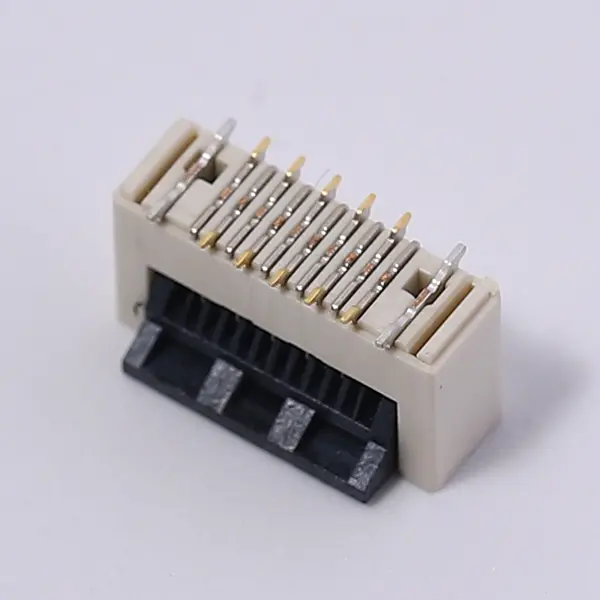
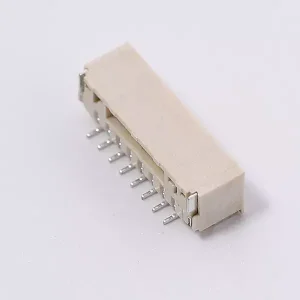
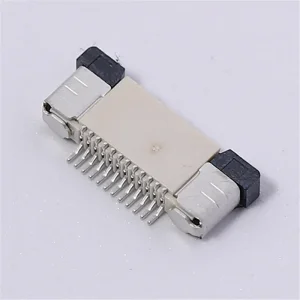
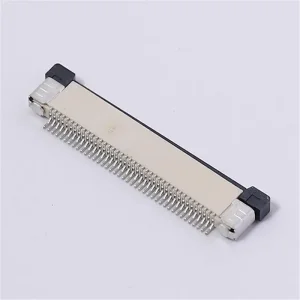
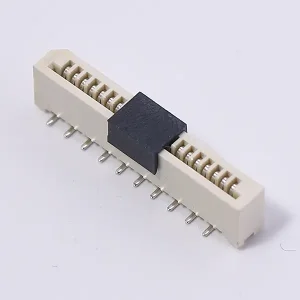
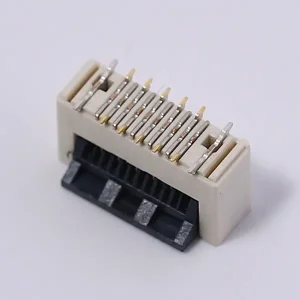
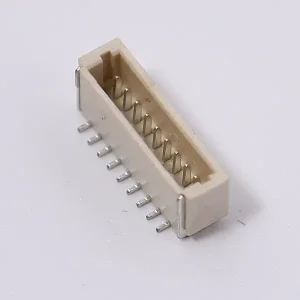
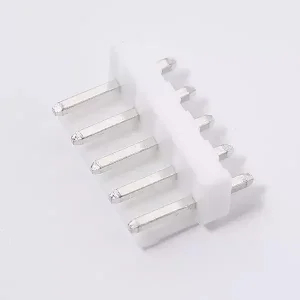
CE Certification FPC connector 10P Factory, Exporters

FPC connectors are key electronic components adapted for flexible printed circuits, featuring fine pitches (commonly 0.3mm, 0.5mm) and lightweight, thin designs that perfectly meet the needs of modern devices for miniaturization and high-density integration. Their unique locking mechanisms (such as flip covers and buckles) can firmly clamp FPCs, preventing poor contact caused by vibration or plugging, and ensuring stable signal transmission.

These connectors are widely used in scenarios such as smartphone screen cables, laptop touch modules, and internal circuits of drones. They achieve efficient automated assembly through SMT technology and are compatible with various signal types. The use of environmentally friendly materials makes them compliant with RoHS standards, while their high-speed transmission performance supports protocols like USB 3.1. They balance flexibility and reliability in limited spaces, serving as a core solution in the field of flexible connections.

Product Description

FPC Connectors Overview
FPC connectors are precision electronic interface components designed specifically for flexible printed circuits (FPC). Characterized by fine pitches such as 0.3mm and 0.5mm, along with lightweight and thin structures, they have become the core solution for achieving flexible connections in modern electronic devices.
High-Density Clamping & Locking Mechanisms
Their integrated locking mechanisms (such as flip-type and pull-type buckles) can provide stable clamping force, avoiding poor contact even in high-frequency vibration environments and ensuring the continuity of signal transmission.
Core Applications in Consumer Electronics
In the consumer electronics field, FPC connectors are the "nerve hubs" of smartphones. The transmission of display signals between the screen and the motherboard, the conduction of image data in camera modules, and the connection of induction signals in fingerprint recognition modules all rely on them. The touchpad cables of laptops, the hinge circuits of foldable screens in tablets, and the flexible connection between the dial and the body of smart watches also need to rely on their high-density pin design to complete multi-signal synchronous transmission in a millimeter-level space.
Industrial & Wearable Tech Adaptability
Industrial & Smart Home
Powering drone pan-tilts for uninterrupted 360° signal transmission, wear-resistant sweeping robot boards, and smart refrigerator panels with temperature adaptability (-40℃ to 85℃).
Emerging Fields
Supporting curved sensor circuits of wearables, flexible electrode connections of medical monitors, and foldable cables for in-vehicle screens.
Advanced Assembly
Utilizes SMT patch technology for automated assembly. Meets eco-friendly requirements and supports high-speed transmission (USB 3.1 & LVDS).
This component, which integrates flexibility, reliability, and compatibility, is constantly promoting the evolution of electronic devices towards being lighter, thinner, and smarter.
Frequently Asked Questions (FAQ)
Q1: What defines FPC connectors and what are their typical pitches?
FPC connectors are precision electronic interface components designed specifically for flexible printed circuits. They are characterized by fine pitches, commonly 0.3mm and 0.5mm, alongside lightweight and thin structures.
Q2: How do FPC connectors maintain connection stability during vibration?
They feature integrated locking mechanisms, such as flip-type and pull-type buckles, which provide stable clamping force. This prevents poor contact even in high-frequency vibration environments, ensuring continuous signal transmission.
Q3: What roles do FPC connectors play in smartphones?
They act as the central nerve hubs for smartphones, managing the transmission of display signals between the screen and motherboard, image data in camera modules, and induction signals in fingerprint recognition modules.
Q4: What is the operational temperature range of FPC connectors in smart homes?
In smart home applications, such as the touch control panels of smart refrigerators, FPC connectors demonstrate adaptability to a wide temperature range, operating reliably from -40℃ up to 85℃.
Q5: What advanced interfaces and assembly technologies do they support?
FPC connectors support SMT patch technology for automated assembly. Additionally, they are compatible with high-speed transmission protocols such as USB 3.1 and LVDS, while meeting the requirements of environmentally friendly materials.

Related Products