Deploying ruggedized performance across computing nodes and switching boards. Browse our precision-manufactured OEM thermal products and specialized interface interfaces.
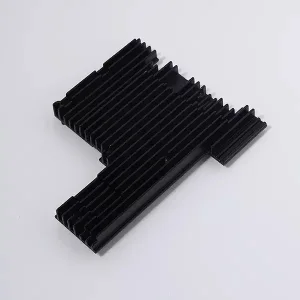
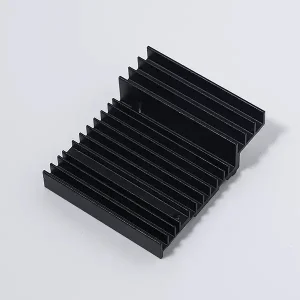
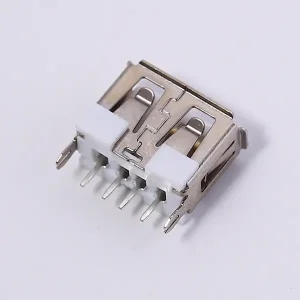
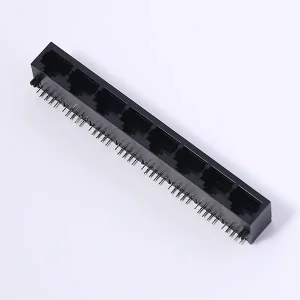
Modern electronic designs are governed by a simple, unrelenting physical reality: power density is increasing exponentially. As integrated circuits shrink and compute workloads transition to extreme processing models—such as artificial intelligence, 5G wireless networking infrastructure, high-power DC/DC conversion, and high-frequency RF systems—thermal management has ceased to be an afterthought in product design. It is now the primary bottleneck of system reliability, lifespan, and processing throughput.
According to the physics of semiconductor failure, the Mean Time to Failure (MTTF) of an electronic component decreases exponentially with an increase in junction temperature. A sustained 10°C rise above nominal working boundaries can slash device lifespan by up to 50%. Consequently, sourcing high-efficiency, engineered-to-spec OEM radiators and heat dissipation systems is a mission-critical objective for system designers worldwide. Wenzhou Stpete Electronics Technology Co., Ltd. answers this call by developing and fabricating highly optimized thermal components that bridge the gap between heavy structural load requirements and tight volumetric limits.
Established in 2005, Wenzhou Stpete Electronics Technology CO., LTD is a certified high-tech enterprise specializing in the research, development, production, and international trade of advanced electronic connectors, high-efficiency radiators, and RF components. Over two decades of rigorous operational refinement, we have established ourselves as a cornerstone supplier for elite global brands, engineering solutions that withstand the test of demanding industrial lifecycles.
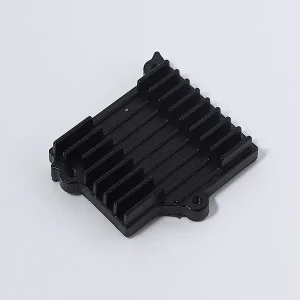
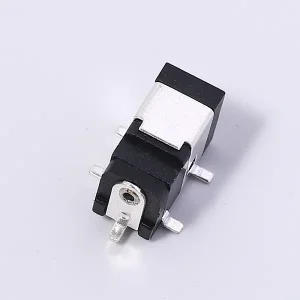
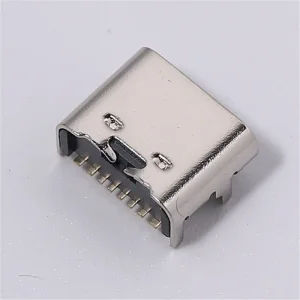
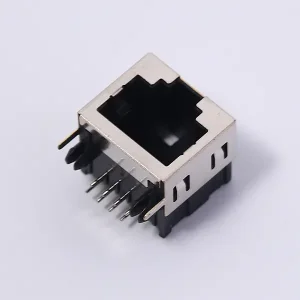
Our comprehensive production footprint integrates a full spectrum of heavy and precision machinery. Our facilities house high-level stamping presses, multi-slide automatic assembly systems, and advanced CNC machining centers to guarantee micro-level dimensional compliance and high-volume consistency. Our key product portfolio features:

Selecting the correct mechanical configuration and material science determines whether a cooling system survives high thermal stress cycles or degrades rapidly due to interface boundaries.
At Wenzhou Stpete Electronics, we employ advanced Computational Fluid Dynamics (CFD) simulations to analyze convection currents, pressure drop profiles, and local turbulence values before releasing custom radiator tooling. The fundamental heat transfer equation drives our manufacturing parameters:
Q = h × A × ΔT
Where: Q = Rate of convective heat transfer, h = Convective heat transfer coefficient, A = Exposed surface area, and ΔT = Temperature delta between the solid heat sink surface and ambient cooling medium.
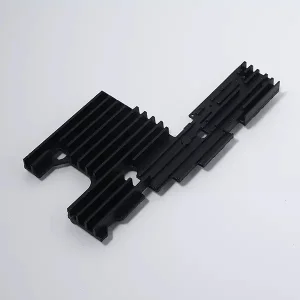
To maximize the effective heat transfer surface area (A) without inflating the physical system envelope, our engineering department designs optimized geometries. High-efficiency radiators typically follow one of three primary manufacturing pathways:
Extensively utilized for cost-efficiency. Ideal for natural convection environments. By forcing heated billets of Aluminum alloy AL6063 through precision custom dies, we yield dense fin structures optimized for high airflow bypass.
Designed for confined envelopes. Utilizing a high-precision slicing blade, we shave thin, densely spaced vertical fins from a solid block of copper or aluminum. This eliminates interface thermal resistance between fin and base plate.
Combines the thermal conductivity of a copper base plate with the weight savings of aluminum fins. Individual fins are epoxy-bonded or brazed into grooves cut into the radiator base to optimize thermal resistance.
| Material Metric | Copper (C1100) | Aluminum (Al6063) | Aluminum (Al1060) | Engineering Benefit |
|---|---|---|---|---|
| Thermal Conductivity (W/m·K) | 390 – 401 | 201 – 218 | 230 | Higher numbers reduce the temperature gradient within the radiator base. |
| Density (g/cm³) | 8.96 | 2.70 | 2.70 | Weight considerations in aerospace, mobile, and transport applications. |
| Corrosion Resistance | Moderate | Excellent (Anodized) | Good | Surface finishing (anodization, nickel plating) controls long-term oxide wear. |
| Primary Application | High density CPUs / VCs | Extruded heatsinks | Stamped fine fins | Tailoring material selection to project-specific cost and performance targets. |
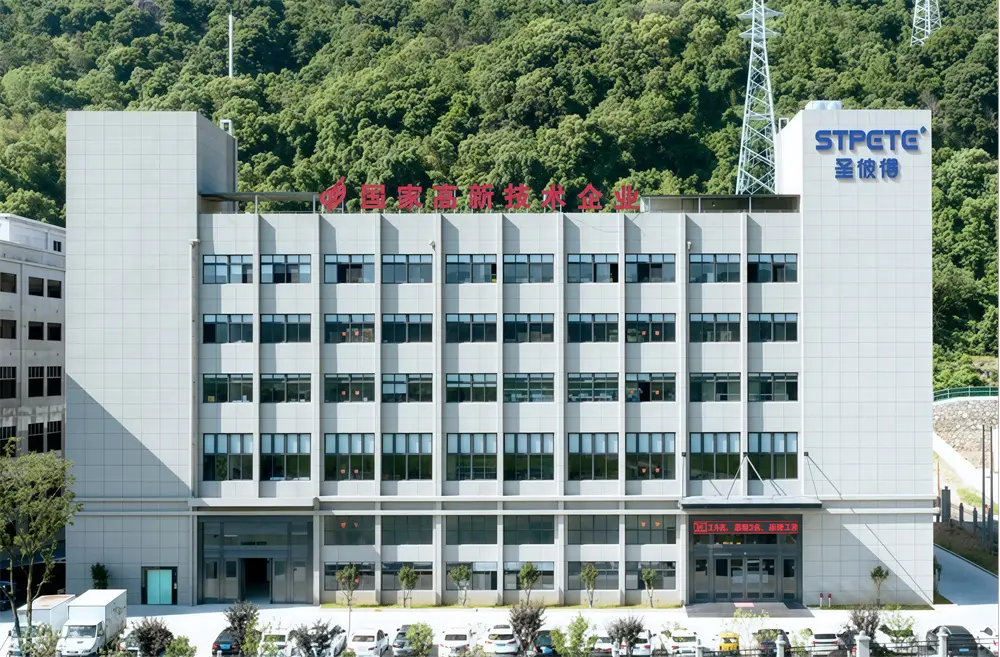
For Wenzhou Stpete Electronics, quality is an engineered guarantee rather than an inspection checkbox. To sustain relationships with tier-1 technology partners including Huawei and Hisense, we implement multi-layer check gates across our raw materials, tooling, in-line processes, and finished product lots.
Our quality department operates a state-of-the-art testing lab housing coordinate measuring machines (CMM) for micrometric dimensional verification, salt spray chambers for corrosion testing, insertion-withdrawal force meters for connector arrays, and thermal imaging cameras for radiator testing. Supported by certified compliance across ISO 9001, ISO 14001, and ISO 45001 (originally 18001), our engineering projects consistently fulfill global safety criteria.
Custom thermal designs from Stpete Electronics operate across primary industrial and commercial hubs worldwide, conforming to specific localized environments.
Outdoor 5G macro stations demand passive cooling systems capable of shedding several kilowatts of heat without fan intervention. Our anodized, wide-fin radiators resist harsh wind and marine moisture conditions in North America and coastal Europe while maintaining low junction temperatures for processing ASICs.
Electronic control units (ECUs) and autonomous driving processing modules generate high localized heat under engine bays or dashboard shells. We customize specialized pin-fin radiator modules with integrated RF/DC connectivity interfaces that survive high G-force road vibrations.
Photovoltaic inverters and wind turbine control loops utilize high-power IGBT switches. Stpete designs heavy-duty extruded aluminum profile radiators and skived copper assemblies that prevent thermal runaway during peak solar radiation periods in South America and the MEA region.
China's manufacturing sector continues to lead the global supply chain, driven by high integration density and raw material proximity. Headquartered in Wenzhou, Wenzhou Stpete Electronics sits at the center of an advanced industrial ecosystem. This geographical positioning gives us key operational advantages:
Doing business internationally requires navigation of localized technical standards and regulatory compliance policies. Our company has built an overseas distribution support system to provide local engineering consultations and custom stock holding solutions.
All structural radiators, RF terminals, and connector products leaving our loading bays conform strictly to the RoHS Recast Directive 2011/65/EU and REACH regulations. We provide complete material declarations, conflict mineral reports, and UL 94-V0 flame retardant statements to verify safety across consumer, automotive, and defense equipment applications.
Our technology roadmap is focused on improving thermal performance and integration density. Wenzhou Stpete Electronics is investing in two key R&D areas:
Graphene-Based Thermal Interface Materials: In partnership with regional materials laboratories, we are testing thin, nano-graphene coatings applied to aluminum radiator fin structures. These show a potential 12-18% increase in radiative heat transfer over standard anodized finishes.
Integrated Liquid Cooling Blocks: As high-performance computing chipsets exceed 500W TDP, conventional air cooling reaches its thermodynamic limit. We are developing hybrid cold plate systems that combine skived copper fin geometries inside closed-loop liquid systems, featuring quick-connect RF/fluid interfaces.


Excellent product manufacturing relies on strong engineering collaboration. Our outdoor team-building activities strengthen teamwork, communication, and cohesion across departments, translating into better problem-solving and focus in the factory.
These activities build cross-departmental coordination, helping to reduce stress and improve motivation. Strong communication channels translate to faster prototyping cycles, better quality control, and reliable delivery for our clients.
Technical details on OEM radiators, custom connector designs, and ordering logistics.
Copper features thermal conductivity of approximately 400 W/m·K, which is nearly double that of Aluminum (200 W/m·K). However, copper is heavier and more challenging to machine. For systems with space constraints, skived copper is often preferred. For applications where weight or cost are key, anodized extruded aluminum is typically the optimal choice.
We employ an ISO 9001:2015 quality control loop. This includes testing incoming raw materials, monitoring parameters on our CNC and stamping lines, and performing final inspections (covering dimensional accuracy, insertion force, and salt spray resistance).
Yes. Our R&D engineering department uses CAD/CAM modeling and CNC machining to develop custom molds and housings. We collaborate on co-development projects with key electronics manufacturers like Huawei and Hisense.
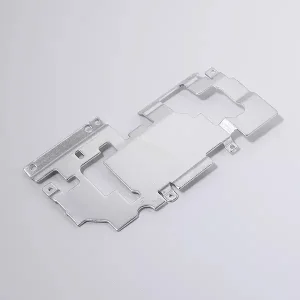
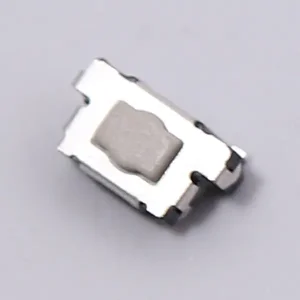
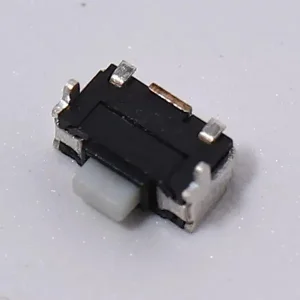
Our tactile switches, RJ45 ports, TYPE-C interfaces, and smaller radiators are designed with flat pick surfaces and are packaged in tape-and-reel or tray formats compatible with high-speed SMT placement machinery.
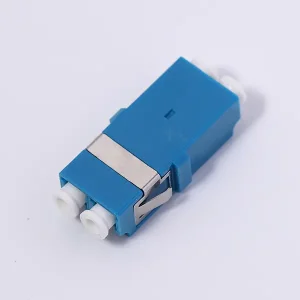
Precision interface switches, optical interfaces, and robust connector hardware from Stpete Electronics.
 Stpete Electronics