High-accuracy component solutions designed to maintain system integrity under stringent electromagnetic conditions.
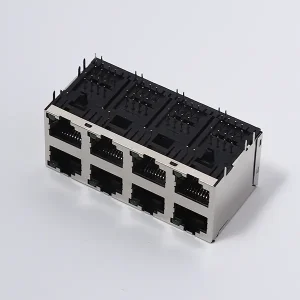
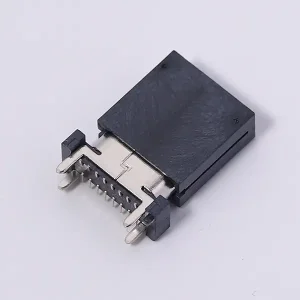
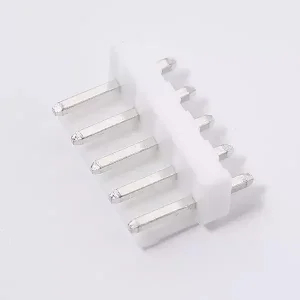
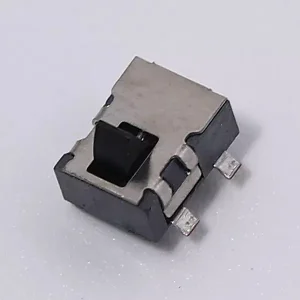
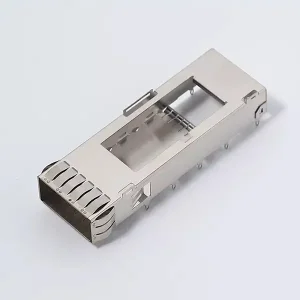
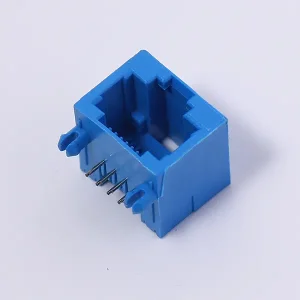
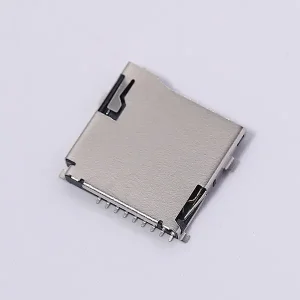
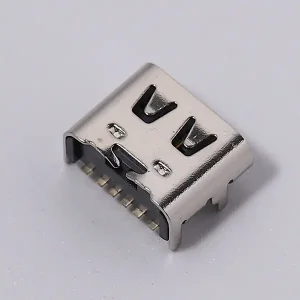

Wenzhou Stpete Electronics Technology Co., Ltd. (established in 2005) is a recognized national high-tech enterprise specializing in the R&D, advanced fabrication, and global export of high-grade electronic connectors and board-level shielding systems. For nearly two decades, we have partnered with market leaders like Huawei and Hisense to pioneer critical interconnections and custom shielding covers for complex telecommunications, automotive electronics, and precision consumer appliances.
Our commitment to rigorous design parameters and state-of-the-art material processing has allowed us to build an impeccable reputation. By integrating complete design-to-delivery workflows, we ensure our global partners receive component batches optimized for maximum signal integrity, structural toughness, and thermal dissipation.
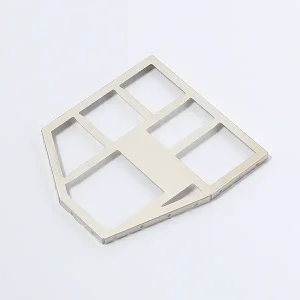
In modern electronic packaging, the rapid density escalation of integrated circuits (ICs) combined with higher processing frequencies (reaching deep into GHz bands) has made Electromagnetic Interference (EMI) and Radio Frequency Interference (RFI) a critical bottleneck for signal transmission stability. Precision metal shielding covers, or board-level shields (BLS), function as Faradaic enclosures that intercept radiated electromagnetic wave propagation. By positioning a conductive barrier directly over noisy or sensitive components on the printed circuit board (PCB), external and internal interference is effectively suppressed through a triad of mechanisms: reflection loss ($R$), absorption loss ($A$), and multiple reflection correction ($B$).
Key Design Rule: Waveguide Beyond Cutoff (WBC)
For ventilation and heat dissipation, holes must be punched into the shielding covers. To prevent RF leakage, the diameter of these openings must be calculated using the cutoff wavelength equation. Any aperture operates as a waveguide. When the aperture diameter ($d$) is significantly smaller than the half-wavelength ($\lambda/2$) of the target frequency, electromagnetic fields decay exponentially along the depth of the aperture. Our engineers utilize precise CNC punching tooling to maintain hole matrices that satisfy $d < \lambda/20$, guaranteeing excellent attenuation ($>80\text{ dB}$) at high operational frequencies.
Furthermore, material selection dictates the skin depth ($\delta$), which defines the distance into a conductor that an electromagnetic wave must travel to decay to $1/e$ of its original amplitude. High-frequency applications rely heavily on thin-gauge materials with high electrical conductivity, such as Nickel Silver or Copper Alloys, to achieve minimal skin depths and lightweight configurations. Our metal stamping capabilities allow us to process ultra-thin gauges (down to 0.15mm) while maintaining structural rigidity.
When mass-assembling PCBs using Surface Mount Technology (SMT), the co-planarity of the shielding cover frame is paramount. If the co-planarity tolerance exceeds 0.08mm, it leads to solder joint failures, open circuits, or weak mechanical joints during reflow soldering. Wenzhou Stpete Electronics addresses this by employing advanced progressive stamping dies with built-in stress-relief stations, preventing metal springback during manufacturing.
| Shielding Cover Type | Common Material Alloys | Standard Thickness Range | Co-planarity Tolerance | Primary Application Areas |
|---|---|---|---|---|
| One-Piece Shielding Cover | Tin-Plated Steel (SPCC), Nickel Silver | 0.15mm – 0.30mm | ≤ 0.08mm | Cost-effective consumer IoT, power modules, small form-factor devices |
| Two-Piece System (Frame + Lid) | Nickel Silver (C7521/C7701), Stainless Steel | 0.20mm – 0.40mm | ≤ 0.05mm | High-frequency RF transceivers, SFP modules, telecommunication systems |
| Multi-Cavity Shielding Enclosures | Nickel Silver, Custom Copper Alloys | 0.15mm – 0.25mm | ≤ 0.06mm | ADAS systems, automotive radar modules, baseband boards |
To assure seamless SMT pickup, our shielding covers are packaged in compliant embossed carrier tape (Tape & Reel) with pre-applied pickup targets or Kapton polyimide dots, ensuring 99.99% placement accuracy on high-speed pick-and-place feeders.
Underpinned by complete ISO-compliant ecosystems and advanced physical testing methodologies.
Quality is the cornerstone of our manufacturing philosophy. Wenzhou Stpete Electronics has invested in a complete suite of physical inspection equipment to evaluate parameters such as mechanical tension, micro-hardness, solderability, and salt-fog corrosion resistance. Our inspection labs feature high-accuracy non-contact optical coordinate measuring machines (CMM) that instantly verify dimensional tolerances within ±0.01mm.
We actively monitor incoming raw materials (IQC) utilizing spectrometer material analysis to ensure no sub-standard steel or copper alloy enters our punching lines. In-process inspection (IPQC) involves rigorous inspection steps at every critical bending, cutting, and stamping sequence, effectively preventing assembly line defects from escaping downstream.

We combine high-performance thermoplastic resins with precision-formed metal matrices. Our insert molding processes are optimized for mechanical robustness and exceptional electrical insulation, critical for high-density automotive plug assemblies and board connectors.
By designing custom automated assembly machines and implementing automated optical inspection (AOI), we eliminate manual assembly variations. This drives down reject rates and guarantees consistent mechanical tolerances across millions of produced units.
With an annual R&D investment exceeding 15 million RMB, our engineering team manages 21+ national patents. We constantly push the boundaries of materials science and progressive die life, ensuring reliable shielding performance at minimal manufacturing costs.
Precision shielding covers are critical protective elements utilized across diverse industries, from telecommunications and industrial automation to advanced consumer electronics and electric vehicles. Every application sector presents unique mechanical, electrical, and thermal constraints:
Modern autonomous driving relies on radar, LiDAR, and high-speed data links that generate complex EMI noise. Furthermore, automotive components must withstand high vibrations and temperature cycles ranging from -40°C to +125°C. Stpete supplies structural multi-cavity shielding covers made of corrosion-resistant tin-plated steel or copper alloys that resist mechanical stress and maintain integrity under harsh operating conditions.
5G wireless communication relies on multi-channel RF transceivers, where co-site interference can degrade receiver sensitivity. Stpete designs and fabricates custom two-piece shielding systems with detachable lids. These lids feature specialized internal spring finger contacts that press tightly against the solderable PCB frame, creating a continuous conductive path that eliminates high-frequency RF leakage.
Smartphones, wearable fitness trackers, and IoT sensors demand ultra-low profile configurations. In these configurations, internal space is limited, and structural shields must double as heat sinks. By leveraging thin-gauge materials (0.15mm and 0.12mm) and proprietary progressive die stamping techniques, we can form micro-shielding boxes with ultra-thin walls, maximizing board space for crucial circuitry.
For high-throughput enterprise servers, network switches, and fiber-optic SFP interfaces, multi-cavity shielding covers prevent crosstalk between adjacent high-speed signal tracks. Our metal covers are built with precise latching points and custom ventilation windows, providing excellent thermal dissipation without compromising EMI attenuation performance.
As a global exporter, Wenzhou Stpete Electronics ensures all components comply with international regulatory frameworks. Our products carry CE Certification, guaranteeing alignment with European health, safety, and environmental protection standards. Furthermore, we adhere to RoHS (Restriction of Hazardous Substances) and REACH directives, ensuring that no hazardous chemical compounds are utilized in our metal platings or plastic resins.
We maintain an agile supply chain, with optimized logistics routes that connect our manufacturing base to major ports, assuring prompt delivery to assembly sites across Europe, North America, and Southeast Asia. For custom projects, our R&D center provides localized technical consulting and virtual co-design. This ensures the customer's engineering parameters (such as SMT reflow profile, trace layout clearances, and mechanical tolerances) are fully integrated into our tooling designs prior to mass stamping.
The electronic hardware industry is moving toward higher frequencies (millimeter-wave and 6G technologies), requiring advancements in shielding architectures. Our technology roadmap focuses on three development areas:
At Stpete Electronics, we believe that technological innovation is driven by the strength and cohesion of our team. In this summer, our company organized an outdoor team-building activity to strengthen cohesion and foster teamwork. The event took place in a picturesque natural setting, providing a perfect backdrop for enhancing team spirit and collaboration.
The team-building activity was designed to promote unity and cooperation among our employees. Through a series of challenging and fun exercises, the participants had the opportunity to work together, communicate effectively, and problem-solve as a team. It was a great chance for everyone to bond, both personally and professionally, outside the confines of the office environment.
One of the highlights of the day was a series of team-based challenges that required trust, coordination, and quick thinking. These activities encouraged individuals to step out of their comfort zones, build trust in their colleagues, and see the value of working together towards a common goal. As a result, the event not only improved teamwork but also boosted morale and motivation within the company.
Furthermore, the outdoor setting provided a refreshing change of scenery, allowing everyone to unwind and connect with nature. This change of environment helped in reducing work-related stress and promoting a sense of well-being among the participants. It was a great opportunity for the team to relax, recharge, and return to work with renewed energy and enthusiasm, driving our continuous commitment to excellence.
We own and operate high-level progressive punching and CNC machining lines to assure the high accuracy and reliability of all manufacturing outputs. With over 20 R&D personnel and our advanced production setups, we are capable of delivering custom solutions for challenging shielding geometries.
We hold certifications for ISO 9001, ISO 14001, and ISO 18001, verifying our compliance with international quality, environmental protection, and occupational safety guidelines. Our automated processes, combined with our insert molding and finished-product assembly systems, enable us to scale production efficiently while meeting tight tolerances.


Technical answers to key engineering, material selection, and SMT integration questions.
Nickel Silver (alloys C7521 and C7701) is the preferred material for high-frequency RF applications because it offers good electrical conductivity, excellent corrosion resistance, and high solderability without requiring post-plating. For cost-sensitive designs operating at lower frequencies, Tin-Plated Cold Rolled Steel (SPCC) provides a balanced compromise. For high mechanical stress or complex multi-cavity designs, Stainless Steel or Beryllium Copper (BeCu) is recommended due to their high yield strength and resilience.
Our progressive stamping dies are designed with integrated stress-relief stations that counter the natural springback of sheet metal after forming. Additionally, we run 100% optical checks using coordinate measuring machines (CMM) and supply our shielding covers in premium embossed carrier tapes (Tape & Reel) with pre-applied pickup targets or Kapton dots. This keeps the shield surfaces perfectly flat prior to and during SMT pick-and-place and reflow operations.
A two-piece shielding cover consists of a solderable frame and a detachable lid. This configuration allows technicians to remove the lid for component inspection, tuning, or rework without having to desolder the frame from the PCB. It reduces scrap rates and avoids thermal stress on surrounding electronics. One-piece shields are cheaper but must be entirely desoldered if components underneath fail or require maintenance.
Any ventilation hole behaves as a small waveguide. By keeping the diameter ($d$) of the ventilation hole much smaller than the half-wavelength ($\lambda/2$) of the target frequency (optimally $d < \lambda/20$), the electromagnetic waves are forced to decay exponentially along the depth of the hole. This waveguide behavior allows air to flow for thermal dissipation while preventing high-frequency RF fields from escaping.
Our products carry CE certification, verifying that they meet European safety, health, and environmental standards. We also comply with RoHS (Restriction of Hazardous Substances) and REACH directives, ensuring our materials are free of hazardous chemical substances. Our factory operates under ISO 9001 quality management, ISO 14001 environmental management, and ISO 18001 occupational health and safety guidelines.
Our high-precision progressive stamping dies are made of high-quality carbide or tool steels, typically offering a lifetime of 1 to 3 million stampings depending on material hardness and thickness. Tooling design and fabrication generally take 15 to 25 working days, after which initial samples are submitted for customer approval. Mass production runs are typically completed within 10 to 15 days from sample verification.
Industrial-grade components supporting global safety and structural conformity demands.
 Stpete Electronics