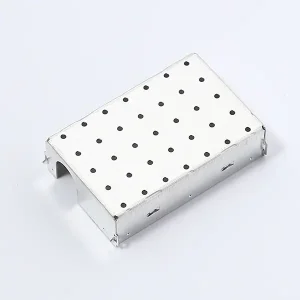
Explore our foundational range of certified connectors, terminal boxes, and custom electronics hardware engineered to industry-leading tolerances.
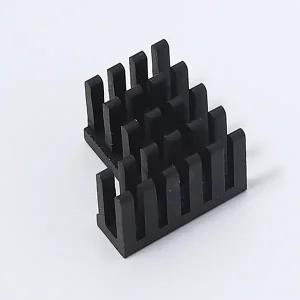
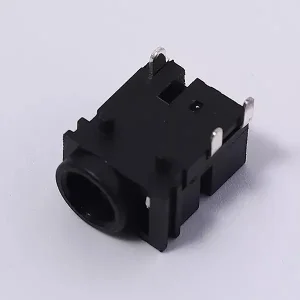
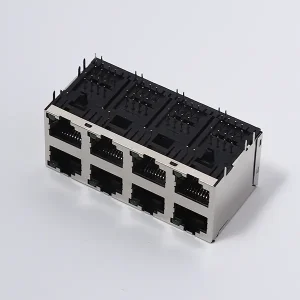
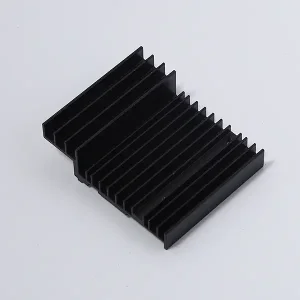
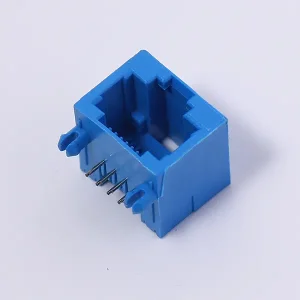
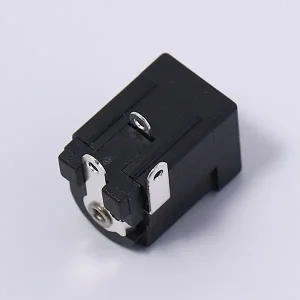
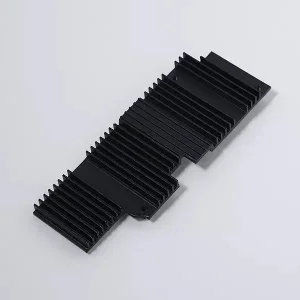
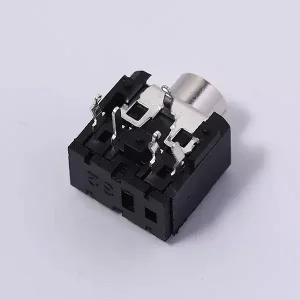
In the modern landscape of high-performance electronics, thermal management is no longer a secondary design consideration; it is a critical limiting factor for system reliability, performance density, and operating longevity. As processors, power supplies, RF amplifiers, and automotive control modules shrink in size while handling higher wattages, the demand for sophisticated cooling structures has grown exponentially. Custom die-cast heat sinks have emerged as the premier manufacturing choice for volume production of complex thermal systems, balancing thermal conductivity, mechanical integration, and cost-efficiency.
This whitepaper details the engineering paradigms, material sciences, manufacturing methodologies, and supply-chain optimizations that make OEM Custom Die-Cast Heat Sinks the standard for high-performance applications. By choosing die-cast solutions over traditional extruded or machined alternatives, global OEMs can achieve complex three-dimensional geometries, integrated mounting hardware, and optimized airflow dynamics in a single, scalable production step.
Thermal management relies on the three pillars of heat transfer: conduction, convection, and radiation. For a heat sink, the primary objective is to transfer heat from a localized, high-temperature source (such as a CPU or IGBT) via conduction through the heat sink base, and then dissipate it into the ambient environment via convection. The efficiency of this process is governed by Fourier's Law of Heat Conduction and Newton's Law of Cooling. Key engineering considerations include:

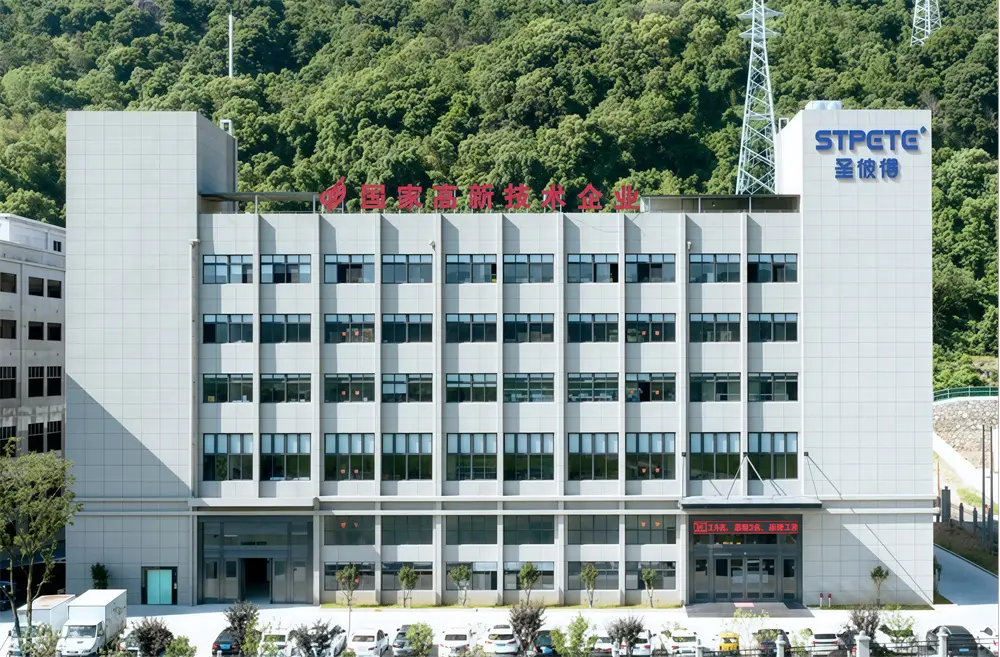
Established in 2005, Wenzhou Stpete Electronics Technology Co., Ltd. is a certified high-tech enterprise dedicated to the design, R&D, production, and distribution of electronic connectors, precision enclosures, and customized thermal radiators. Over two decades of technical evolution, we have established ourselves as a key partner for leading international and domestic brands (including Huawei and Hisense), developing bespoke products that withstand rigorous operational environments.
Our commitment to technical excellence is demonstrated by our integrated production setup. Operating several high-speed progressive punching machines, multi-axis CNC milling centers, and automated assembly suites, we ensure dimensional accuracy and repeatability. With an annual R&D budget exceeding 15 million RMB and a team of 30+ senior engineers, we hold 21 core technology patents. Our manufacturing system is certified under ISO 9001, ISO 14001, and ISO 45001 (OHSAS 18001), guaranteeing process control from raw material ingress to final product dispatch.
China's die-casting sector benefits from robust industrial clusters, specialized raw material access, and advanced tooling engineering. Located in the Wenzhou electronics cluster, Stpete Electronics leverages this ecosystem to deliver rapid tooling design, material sourcing, and post-casting processing.
Direct integration of tool-and-die shops, primary smelting foundries, and surface finishing facilities within our local logistics network reduces lead times for complex molds to 3–4 weeks.
By using 3D metal printing (SLS) and high-speed CNC routing, we deliver operational prototypes for thermal testing within days, enabling iterative validation before tooling investment.
High-volume multi-cavity dies minimize piece-part costs. Advanced process automation ensures consistent quality, lowering total cost of ownership (TCO) for global purchasers.
Precision die-casting demands careful control of metal flow and solidification. Modern die-casting parameters—such as plunger speed, cavity pressure (often exceeding 800 bar), and thermal oil balance within the die—are continuously monitored. Stpete Electronics utilizes numerical simulation software (e.g., Magmasoft, FLOW-3D) to predict porosity, hot tears, and incomplete filling prior to cutting steel. This engineering approach eliminates manufacturing trial-and-error, lowering development costs and accelerating time-to-market.
The choice of alloy dictates both the mechanical performance and the thermal behavior of the final radiator. While pure aluminum offers high thermal conductivity (~240 W/mK), its castability is poor. Accordingly, silicon-aluminum and silicon-copper-aluminum alloys are the industry standard for die casting:
| Alloy (Standard) | Thermal Conductivity (W/m·K) | Silicon Content (%) | Copper Content (%) | Primary Applications & Benefits |
|---|---|---|---|---|
| ADC12 (JIS) | 92 – 120 | 10.5 – 12.0 | 1.5 – 3.5 | Excellent castability, high dimensional stability, standard for general electronic housings. |
| A380 (ANSI) | 96 – 110 | 7.5 – 9.5 | 3.0 – 4.0 | Optimal balance of mechanical strength, machining ease, and thermal conductivity. |
| AlSi10Mg (EN) | 110 – 130 | 9.0 – 11.0 | < 0.1 | Good corrosion resistance, high weldability, ideal for structural thermal parts. |
| AlSi9Cu3 (EN) | 110 – 120 | 8.0 – 11.0 | 2.0 – 4.0 | Excellent high-temperature mechanical properties, widely used in automotive engine blocks and ECU heat sinks. |
Global procurement offices (GPOs) and hardware engineering departments mandate strict criteria when sourcing custom heat sinks. Beyond thermal performance, heat sinks must serve as structural members, shield electromagnetic interference (EMI), and offer robust corrosion resistance in diverse operational environments.
To address these requirements, Stpete Electronics applies structured DFM (Design for Manufacturing) rules at the initial RFQ stage:

In today's regulatory environment, compliance is a prerequisite for market entry. Stpete Electronics ensures that all raw materials, post-processing chemicals, and finished assemblies comply with international environmental directives. Our components are certified under RoHS (Restriction of Hazardous Substances) and REACH (Registration, Evaluation, Authorisation and Restriction of Chemicals), ensuring they are free from banned substances such as lead, mercury, cadmium, and hexavalent chromium.
Our global clients rely on localized logistics and technical support. We offer flexible delivery frameworks including Ex Works (EXW), Free on Board (FOB), Cost, Insurance, and Freight (CIF), and Delivered Duty Paid (DDP). By partnering with international freight forwarders, we maintain consistent supply lines to warehousing hubs in North America, Western Europe, and East Asia, minimizing shipping disruptions.
Several technological trends are driving the development of custom die-cast thermal solutions:
At Stpete Electronics, we believe that technological innovation is driven by collaborative engineering. Our internal programs foster cross-functional synergy between our R&D, tooling fabrication, and quality assurance divisions. To build team cohesion, the company hosts outdoor activities that strengthen trust, communication, and collective problem-solving skills outside the office environment.
This collaborative approach directly benefits customer projects. By aligning our tooling engineers, foundry technicians, and quality inspectors early in the design cycle, we identify potential thermal and mechanical bottlenecks before production begins, lowering risk and accelerating project timelines.
Expert insights on custom die-cast heat sink design, material properties, and manufacturing parameters.
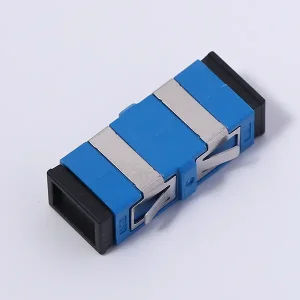
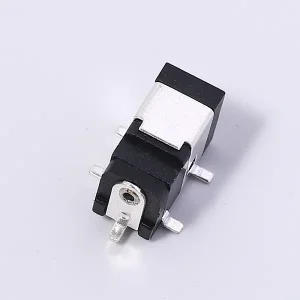
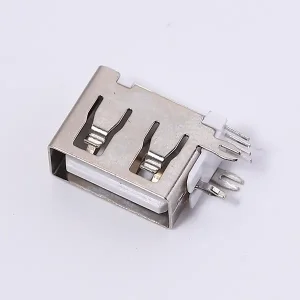
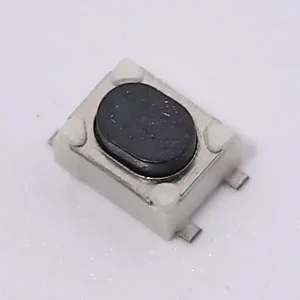
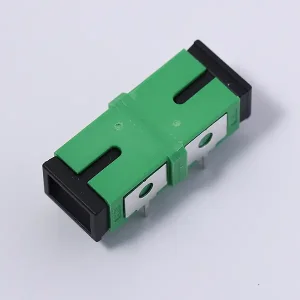
Explore our certified network connectors, switches, fiber optic interfaces, and copper terminals designed for industrial integration.
 Stpete Electronics