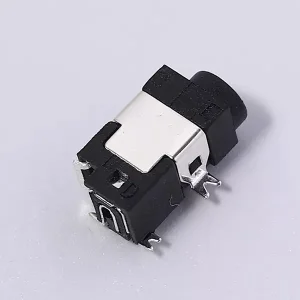
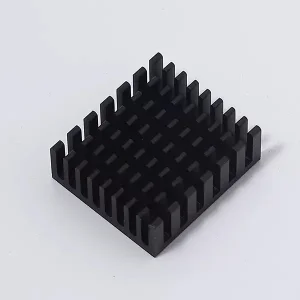
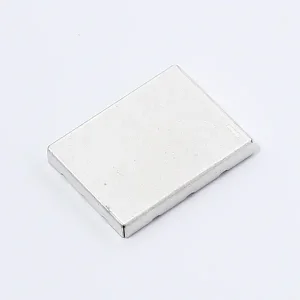
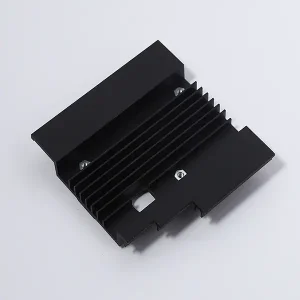
Established in 2005, Stpete Electronics stands as an industry-leading high-tech enterprise specialized in the R&D, advanced fabrication, and global sales of premium electronic connectors and precision custom alloy components.
Over nearly two decades, we have constructed an international reputation based on unparalleled metallurgical knowledge and top-tier product output. Serving key industrial application corridors in the USA, European Union, and East Asia, we deliver complex engineering parts utilizing advanced materials like Nickel Silver (German Silver / Copper-Nickel-Zinc alloys) to ensure reliable conductive paths, structural integrity, and robust electromagnetic shielding.
Our deep integration with high-velocity industries enables us to act not just as a typical supplier, but as a strategic partner to technological giants like Huawei and Hisense. By aligning our structural design processes with their strict verification frameworks, we consistently deliver components designed to perform under demanding conditions.

Despite its historic commercial name, Nickel Silver contain no elemental silver. Rather, it is a versatile, non-precious Copper-Nickel-Zinc alloy (Cu-Ni-Zn). Typically, it contains between 50% to 70% copper, 10% to 25% nickel, and 15% to 38% zinc. The inclusion of nickel delivers a silver-like luster combined with outstanding mechanical performance, superior oxidation protection, and unique physical properties that set it apart from standard brasses and bronzes.
Its high electrical attenuation properties make Nickel Silver the absolute material of choice for high-frequency telecommunications shielding. By preventing internal signals from leaking and blocking external noise, it maintains signal fidelity in complex circuits.
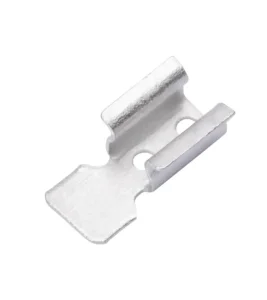
Nickel silver retains its structural memory and spring constant under billions of cyclic operations. This property is crucial for tactile switches, micro-connectors, and headphone socket spring-contact terminals.
Unlike stainless steel, which demands aggressive acid fluxes that can corrode sensitive circuits, Nickel Silver is readily solderable using standard non-corrosive fluxes. This compatibility greatly simplifies automated high-speed surface-mount assembly (SMT).
From a corrosion standpoint, the nickel oxide passivation film formed on the alloy surface acts as a permanent shield, showing high resistance to humidity, saline environments, and mild organic acids. When forming shielding frames or structural contacts, manufacturers prefer grades like C77000 (18% Nickel) or C75200 (18% Nickel, 65% Copper) for their balanced tensile strength (up to 700 MPa depending on temper) and reliable electrical conductivity of approximately 6% to 8% IACS.
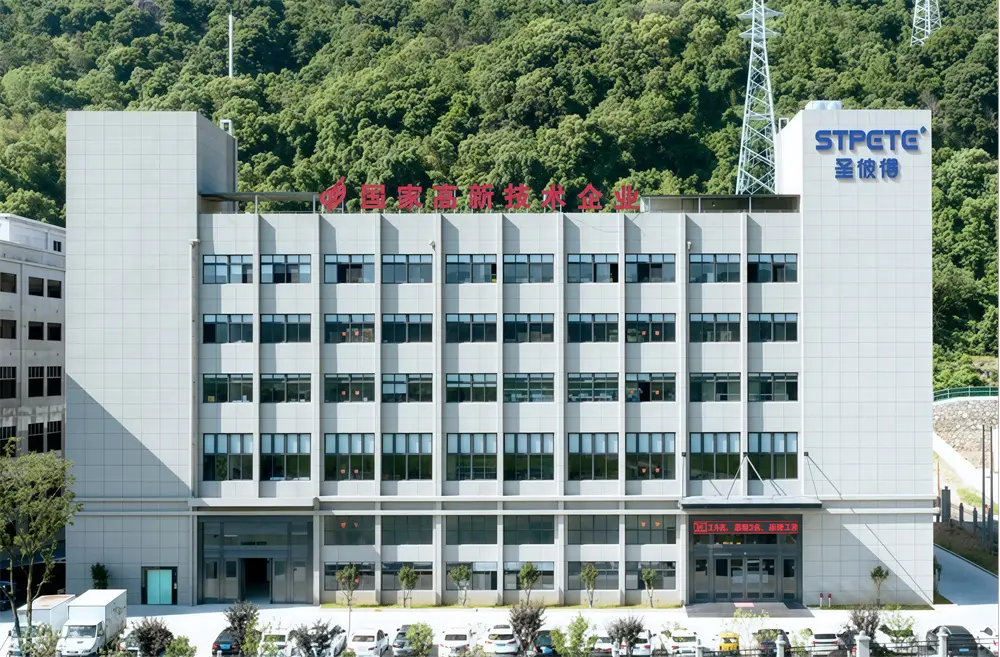
Precision stamping of Copper-Nickel-Zinc alloys requires high mechanical accuracy and control over tool wear. At Stpete Electronics, we employ a fleet of high-speed precision punching systems and advanced CNC centers to fabricate intricate shielding cages and contact terminals with tolerances tighter than ±0.01mm.
Quality assurance is not a final checkpoint; it is integrated directly into our production line:
Stpete Electronics operates strictly under a certified management framework, maintaining active compliance with ISO 9001:2015, ISO 14001:2015, and ISO 45001:2018 standards. This system ensures every batch delivered meets global industrial criteria for performance and reliability.
Modern product cycles require high agility and constant optimization. Operating a competitive factory in China requires more than low cost; it demands high levels of engineering and process automation. At Stpete Electronics, we have adopted Factory 4.0 paradigms, integrating mechanical hardware with digital tracking to maximize efficiency.
By using modern automated assembly tables and precision insert molding systems, we combine stamped nickel silver terminals directly with engineering plastics. This approach limits human handling, reduces defects to single-digit PPM rates, and keeps assembly lines running efficiently.
With an annual R&D investment exceeding 15 million RMB, our design team holds 21 utility and design patents. We utilize computer-aided mold design and stress analysis tools to model material performance prior to physical stamping, saving development time.
We manage all processes under one roof, from initial tooling design and progression run stamping to heat treatment and visual sorting. This vertical integration protects intellectual property, maintains component tracing, and ensures reliable lead times.
Precision nickel silver components and Stpete’s connector solutions are key to maintaining performance across several macro sectors:
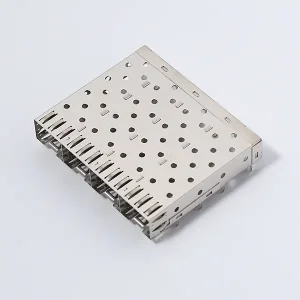
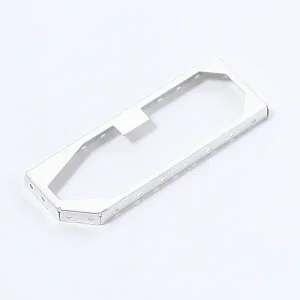
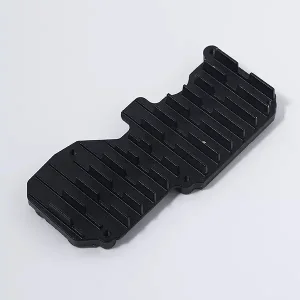
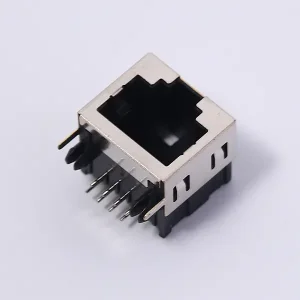
Our nickel silver SFP shielding cages and RJ45 ethernet housings protect high-bandwidth routers, fiber interfaces, and 5G base station transceivers from noise. The alloy's natural electrical properties prevent interference, maintaining signal clarity at gigabit speeds.
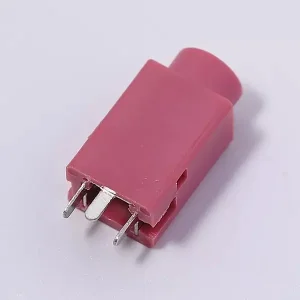
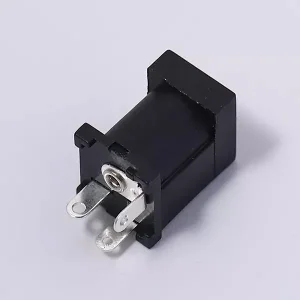
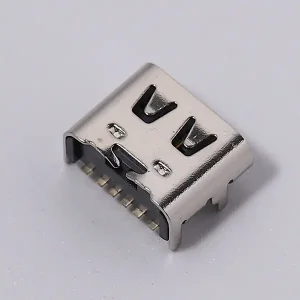
From USB Type-C sockets to headphone jacks and automotive PCB boards, our products handle repeated plug-in cycles. Nickel silver's oxidation resistance ensures low contact resistance, reducing thermal output in power-delivery connections.
In high-vibration manufacturing environments, standard connectors can experience contact fretting and signal loss. Our high-elasticity alloy spring pins maintain secure connections, preventing unplanned equipment downtime.
As micro-electronic architectures move toward higher power density and sub-millimeter scales, standard alloy compositions face physical limits. Stpete Electronics is actively developing its metallurgical technologies to address these future challenges:

Sourcing metallic parts internationally requires strict adherence to environmental regulations and clear logistics processes. Stpete Electronics ensures straightforward integration into your global supply chain:
All materials are shipped with complete material composition documentation, demonstrating compliance with RoHS 3 (EU 2015/863), REACH, and Conflict Minerals regulations. This documentation protects our clients from legal risks.
Located near major shipping ports like Ningbo and Shanghai, we support FCA, FOB, CIF, and DDP delivery models. Our logistics team handles customs paperwork to ensure smooth shipping to facilities globally.
Our engineers convert your 3D CAD files (STEP, IGES, DXF) into production-ready designs. We build prototype runs to verify fit and performance before launching mass manufacturing.
At Stpete Electronics, we believe that high-quality production stems from a motivated, cohesive workforce. Each year, our company organizes outdoor team-building activities to strengthen cooperation and foster collaboration. Taking place in scenic natural settings, these events encourage our R&D, production, and quality control teams to build mutual trust and solve problems together. This positive environment reduces stress, boosts workplace motivation, and helps us maintain a stable team focused on quality production.

 Stpete Electronics