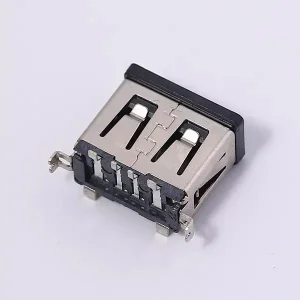
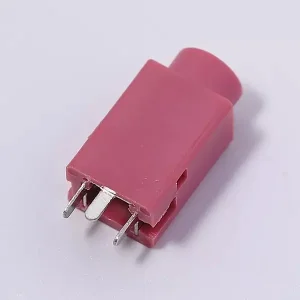
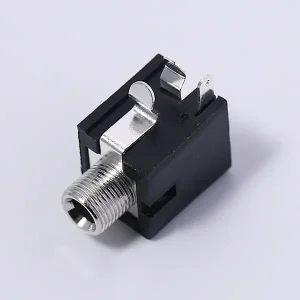
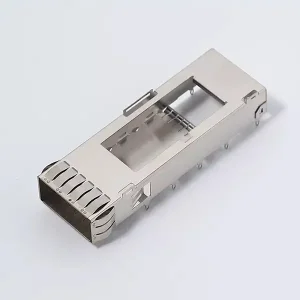
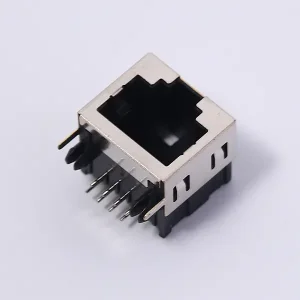
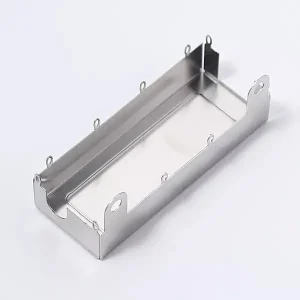
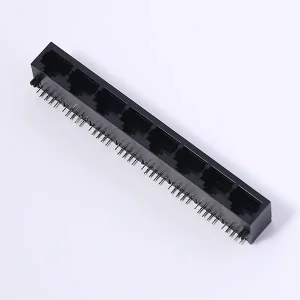
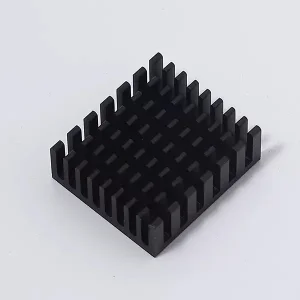
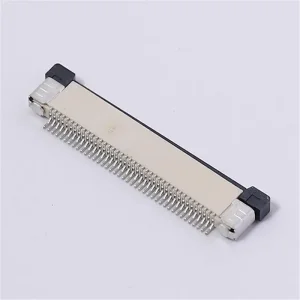
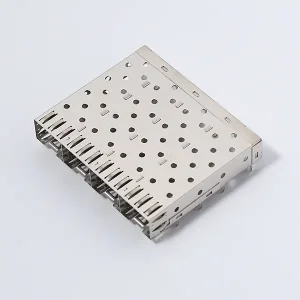
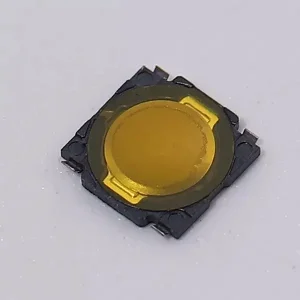
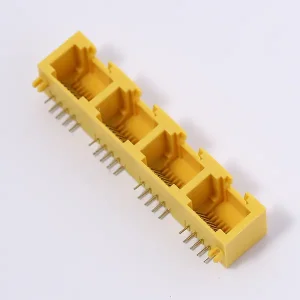
Premium engineering standards featuring high-integrity connection systems and heat management components optimized for global manufacturing exports.
Established 2005 | Certified Quality & Precision CNC Engineering
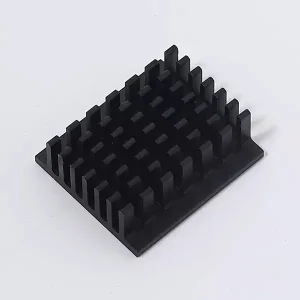
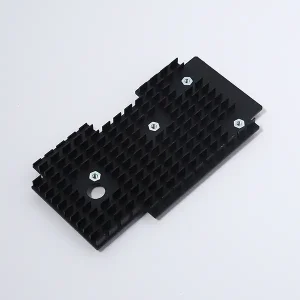
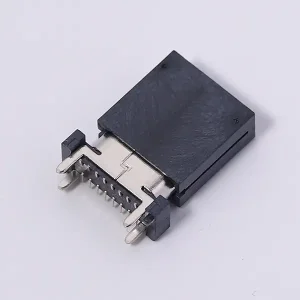
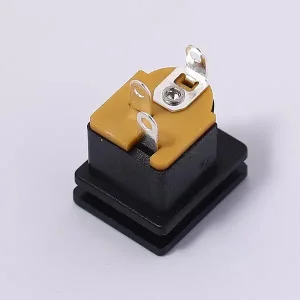
As an industry-leading high-tech enterprise, Wenzhou Stpete Electronics Technology Co., Ltd. specializes in the design, development, high-volume production, and global sale of high-performance electronic connectors, RF terminals, and customized cooling systems. Over two decades of rigorous technical iteration and supply chain integration have enabled us to manufacture next-generation thermal components. We supply CE-certified extruded heat sinks designed to optimize thermal performance in demanding environments, collaborating with world-class OEMs and tech giants such as Huawei and Hisense.
By integrating advanced automated stamping, mold tooling, and precision CNC profile processes, we secure maximum reliability from material procurement to finished delivery.

An engineering analysis of thermal efficiency, material mechanics, compliance requirements, and manufacturing capabilities of high-power cooling solutions.
High-performance power systems require efficient dissipation of thermal energy. Aluminum extrusion remains a cost-effective and structurally reliable method for producing heat sinks. The efficiency of an extruded profile is governed by Fourier's Law of Heat Conduction and Newton's Law of Cooling. The basic equation is:
Q = -k * A * (dT / dx) & Q = h * A * (Ts - Tf)
Where k represents the material's thermal conductivity, A represents the surface area, and h represents the convective heat transfer coefficient. Maximizing the total surface area (A) without restricting airflow is crucial. Modern CNC technology allows us to push extrusion aspect ratios to limits exceeding 15:1. This enables high-density straight fins that increase contact with ambient air. Under forced convection (using dynamic cooling fan modules), these high fin-density configurations minimize thermal resistance ($R_{th}$), preventing junction temperature limits on high-frequency processors and transistors from being exceeded.
Not all aluminum grades perform equally. Wenzhou Stpete Electronics employs high-grade raw alloys, optimizing chemical compositions to strike an balance between thermal performance and structural integrity:
We use chemical bath anodization (clear, black, and colored) to increase surface emissivity. Black anodized finishes can boost radiative heat transfer by up to 10-15% under passive natural convection conditions, while also providing crucial dielectric protection and anti-corrosive properties in humid environments.
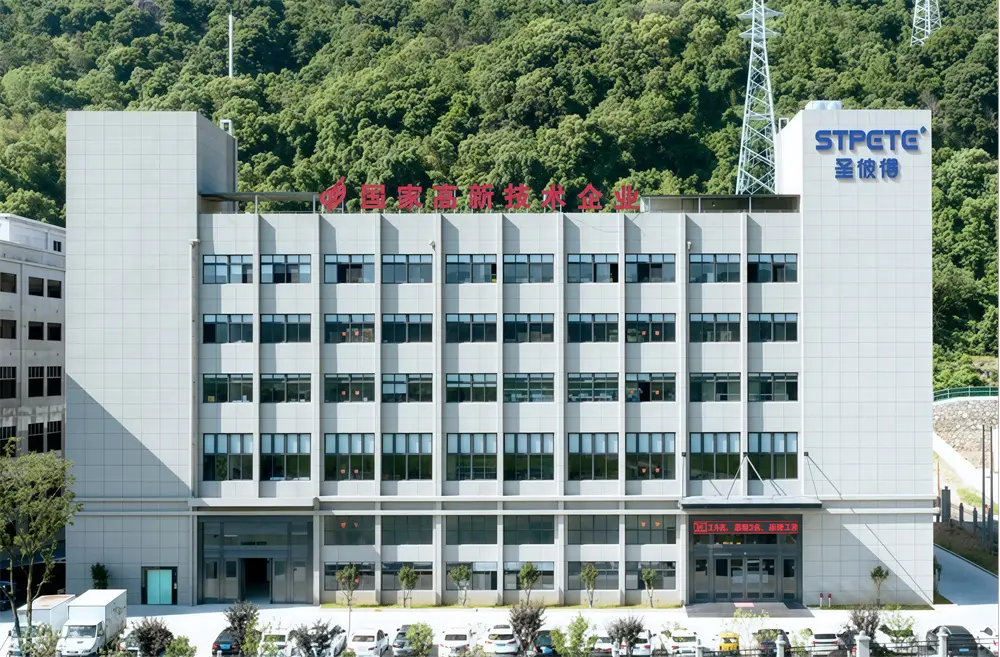
Quality control at Stpete Electronics is integrated into every phase of production. We operate high-accuracy Coordinate Measuring Machines (CMM) and industrial profile projectors to ensure tolerance levels within ±0.05mm.
Our testing procedures include thermal cycle testing chambers, contact resistance analysis, and surface hardness testing. This helps ensure that every heat sink, connector, and terminal block meets long-term performance standards.
Compliance is critical for global supply chains. For European Union and global markets, CE certification serves as a key indicator of safety, quality, and environmental compliance. Our production processes align with the following regulatory frameworks:
How Wenzhou Stpete Electronics leverages cluster effects, raw material integration, and automated production to deliver global value.
We house raw material casting, high-tonnage extrusion presses, multi-axis CNC milling centers, and surface anodizing within a single facility. This helps reduce external logistics wait times and lowers overall production costs.
Supported by an annual R&D budget of 15 million RMB, our team of 30+ development engineers designs custom tooling dies in-house, accelerating prototypes from design to production in as little as 7 days.
Collaborating with top-tier technology enterprises has helped us develop rigorous manufacturing standards. We implement advanced quality methods, including Failure Mode and Effects Analysis (FMEA), to meet high performance requirements.
Our solutions are engineered to meet the needs of procurement managers, thermal engineers, and supply chain directors across various industries.
In modern communication networks, SFP transceivers, RJ45 ports, and coaxial RF terminals generate significant heat in localized spaces. Excessive temperatures can degrade signal integrity and shorten the lifespan of optoelectronic components. Wenzhou Stpete Electronics designs custom heat sinks with thin fins that integrate with connector shields, maintaining low junction temperatures even during continuous 100Gbps data transmission.
EV fast-charging stations and photovoltaic inverters convert high levels of power, generating substantial waste heat. Standard cooling methods may be insufficient for modules processing hundreds of kilowatts. Our heavy-duty extruded heat sinks, made from high-purity aluminum alloys, provide the thermal capacity and surface area needed for reliable outdoor operations under varying environmental conditions.
Wenzhou Stpete Electronics utilizes advanced insert molding, automated pin assembly, and high-accuracy punch presses. This enables us to scale production efficiently to meet large orders while maintaining tight tolerances. For global buyers, this means reliable delivery timelines and consistent quality across bulk shipments.
We believe operational consistency is built on a stable, collaborative team. Wenzhou Stpete Electronics regularly organizes structured professional training and team-building programs to promote cross-department communication.
These initiatives help maintain low employee turnover, retaining skilled technicians and engineers who understand our processes. This structural stability supports our ability to meet tight delivery schedules for global projects.

Technical and logistical insights from our engineering and sales support teams.
Browse our certified selection of connector ports, switch modules, and advanced components engineered for global compliance.
 Stpete Electronics